
Physonota alutacea
Boheman, 1854
wild olive tortoise beetle
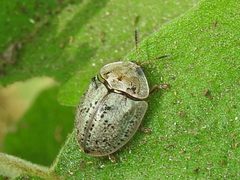
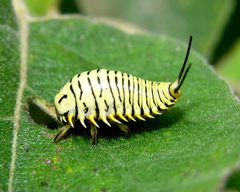
Physonota alutacea, commonly known as the wild olive tortoise beetle, is a leaf beetle in the Chrysomelidae. It belongs to the tortoise beetle Cassidinae, characterized by the distinctive domed body shape typical of this group. The has been documented across a broad geographic range spanning North, Central, and South America. It is associated with wild olive (Cordia boissieri) and related plants.

Pronunciation
How to pronounce Physonota alutacea: /ˌfaɪsəˈnoʊtə ˌæljʊˈteɪʃiə/
These audio files are automatically generated. While they are not always 100% accurate, they are a good starting point.
Images
Distribution
Recorded from North America, Central America, and South America. Specific documented locations include the southwestern United States, Mexico, and countries in Central and South America. In the United States, observations have been made in Texas and neighboring states.
Diet
Feeds on wild olive (Cordia boissieri) and related in the Cordia (Boraginaceae).
Host Associations
- Cordia boissieri - primary plantwild olive
- Cordia - -level associationrelated within the
Similar Taxa
- Physonota helianthicongeneric in the same , also a tortoise beetle with similar domed body form; distinguished by association with sunflower rather than wild olive
- Other Cassidinaeshare the characteristic tortoise-like domed body shape; identification to level requires examination of plant association and detailed morphological features