
Bruchus loti
Paykull, 1800
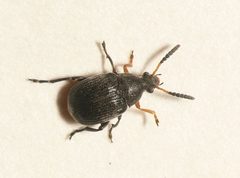
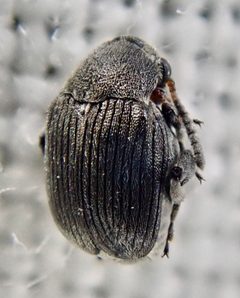
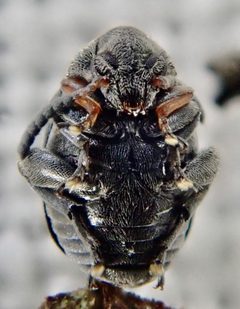
Bruchus loti is a seed-feeding in the Chrysomelidae that primarily attacks seeds of Lathyrus japonicus, a legume . Its larvae bore through hard seed coats to consume seed contents, a that can enhance germination by breaking seed dormancy. However, heavy consumption by unparasitised larvae reduces seed survival. The species is subject to by at least two idiobiont species, Pteromalus sp. and Dinarmus sp., which indirectly benefit the plant by reducing larval feeding intensity and improving seed germination outcomes.
Pronunciation
How to pronounce Bruchus loti: /ˈbruː.kʊs ˈloʊ.taɪ/
These audio files are automatically generated. While they are not always 100% accurate, they are a good starting point.
Images
Distribution
Belgium (confirmed present); broader distribution likely corresponds to that of its plant Lathyrus japonicus, which occurs in coastal and dune across northern Europe and Asia.
Diet
Seeds of Lathyrus japonicus; larvae bore through hard seed coats and consume internal seed contents.
Host Associations
- Lathyrus japonicus - primary plant (seed resource)Legume whose seeds are the main food source
- Pteromalus sp. - Idiobiont that parasitises larvae; parasitised larvae consume less seed material
- Dinarmus sp. - Idiobiont that parasitises larvae
Behavior
Larvae bore through hard seed coats, which mechanically breaks seed dormancy and can enhance germination percentage. Parasitised larvae exhibit reduced feeding intensity compared to unparasitised larvae. The interaction creates a complex tri-trophic relationship where attack indirectly benefits plant reproductive success.
Ecological Role
Seed that facilitates germination of hard-seeded legumes through physical scarification of seed coats. -mediated mortality of larvae contributes positively to plant by preventing excessive seed consumption and improving germination success of remaining seeds.
Sources and further reading
- BugGuide
- GBIF taxonomy match
- iNaturalist taxon
- NCBI Taxonomy
- Waxing Poetic About Honey Bees and This Amazing UC Davis Bee Class on Wax Working | Bug Squad
- Grasshopper Collections and Survey
- How a Journal Article on Mosquito Repellents Went Viral
- Acrididae | Beetles In The Bush | Page 4
- How a Life-Long Interest in Wildlife Brought One Entomologist to Vector-Borne Disease Ecology
- Parasitoid attack of the seed-feeding beetle Bruchus loti enhances the germination success of Lathyrus japonicus seeds