
Sennius
Bridwell, 1946
seed beetles, pea and bean weevils
Species Guides
8- Sennius abbreviatus(Short-spotted Sennius)
- Sennius cruentatus
- Sennius discolor
- Sennius guttifer
- Sennius lebasi(pea weevil)
- Sennius leucostauros
- Sennius medialis
- Sennius morosus
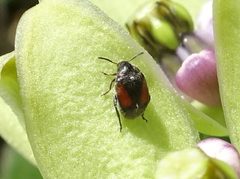
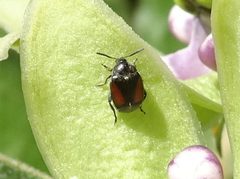
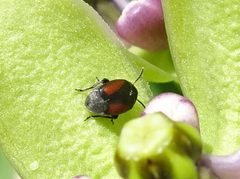
Sennius is a New World of seed beetles ( Bruchinae) within Chrysomelidae, containing at least 20 described . Species are organized into multiple species groups, with the S. abbreviatus group being the largest and most thoroughly studied, comprising 14 species. The genus is characterized by distinctive male genitalia , particularly patterns of and internal sac structure. Several species have been described from Mexico, Central America, and South America, with ongoing taxonomic revisions revealing new species and clarifying plant relationships.
Pronunciation
How to pronounce Sennius: /ˈsɛn.ni.us/
These audio files are automatically generated. While they are not always 100% accurate, they are a good starting point.
Identification
Identification to level requires examination of male genitalia, specifically the pattern of and shape of the internal sac. The S. abbreviatus group is distinguished from other Sennius groups by these genitalic characters. External alone is generally insufficient for reliable species identification within the .
Images
Distribution
New World distribution, with records from North America (United States, Mexico), Central America, and South America (including Brazil, Colombia, and Ecuador). The is not native to the Old World.
Diet
Larvae feed internally within seeds of leguminous plants (Fabaceae). Specific plant associations have been documented for several , though many remain unrecorded.
Host Associations
- Fabaceae - larval food sourceseed feeding; specific vary by
Behavior
females oviposit on or near developing legume pods. Larvae burrow into seeds where they complete development, consuming the seed contents. This concealed feeding habit makes larvae difficult to detect without destructive sampling of seeds.
Ecological Role
As seed , Sennius influence plant recruitment and seed bank dynamics in legume . They function as herbivores within Fabaceae-dominated .
Human Relevance
Some have potential economic significance as pests of cultivated legumes, though specific pest status varies by species and region. The is primarily of concern in agricultural contexts where wild legume serve as for of crop species.
Similar Taxa
- AcanthoscelidesBoth are New World Bruchinae with seed-feeding larvae; distinguished by male genitalia and specific patterns in Sennius
- BruchusOld World bruchine with similar ; Sennius is restricted to the New World and differs in genitalic and external morphological characters
More Details
Taxonomic History
Originally described by Bridwell in 1946. The has undergone significant revision, with groups defined primarily on male genitalia characters. The S. abbreviatus group was formally reviewed in 2013, resulting in description of two new species (S. vivi and S. flinte) and clarification of subgroup structure based on internal sac .
Research Needs
plant associations remain incompletely documented for most . Distribution records are actively being expanded through recent fieldwork, particularly in Brazil and Central America.
Sources and further reading
- BugGuide
- Wikipedia
- GBIF taxonomy match
- iNaturalist taxon
- NCBI Taxonomy
- Catalogue of Life
- Sennius yucatan, n. sp., a Redescription of S. infractus, and New Host Records for Other Sennius (Coleoptera: Bruchidae)
- Three New Species of Sennius from Mexico and Central America, with New Host Records for Other Sennius (Coleoptera: Bruchidae)
- Sennius trinotaticollis(Pic) (Coleoptera: Chrysomelidae: Bruchinae) in Brazil: New Distribution and Host Records
- Review of the largest species group of the New World seed beetle genus Sennius Bridwell (Coleoptera: Chrysomelidae), with host plant associations