
Mimosestes
Bridwell, 1946
pea and bean weevils
Species Guides
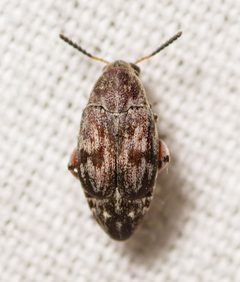
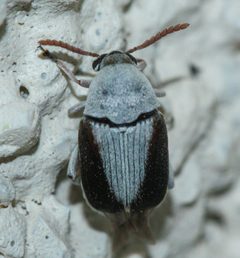
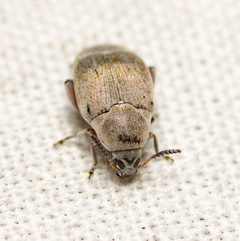
5Mimosestes is a of seed beetles in the Chrysomelidae, Bruchinae, containing approximately 13 described . These beetles are associated with legume seeds and have been documented as introduced species in some regions, including Hawaii. The genus has been subject to phylogenetic studies examining plant utilization patterns. Some species serve as hosts for , including the braconid Urosigalphus mimosestes.
Pronunciation
How to pronounce Mimosestes: //ˌmɪ.moʊˈsɛs.teɪs//
These audio files are automatically generated. While they are not always 100% accurate, they are a good starting point.
Images
Distribution
Native distribution includes the Americas; at least one , Mimosestes sallaei, has been established as an introduced species in Hawaii. GBIF records indicate presence in Colombia (CO), Norway (NO), and Sweden (SE), though the Norwegian and Swedish records likely represent introduced or intercepted specimens given the tropical to subtropical native range of Bruchinae.
Diet
Larvae develop within seeds; plants include legumes (Fabaceae). Specific host records exist for some , including new host records documented for Mimosestes amicus and Mimosestes playazul.
Host Associations
- Fabaceae - seed Larval development occurs within legume seeds
- Urosigalphus mimosestes - Braconid recorded from Ctenocolum janzeni, a bruchid
Life Cycle
Complete with , larva, pupa, and stages. Larval development occurs entirely within seeds.
Ecological Role
Seed ; larvae consume developing seeds within legume pods. May impact seed viability and plant recruitment in native and introduced ranges.
Human Relevance
Some have been introduced outside native ranges, potentially affecting agriculture or native vegetation through seed . Mimosestes sallaei is documented as established in Hawaii.
Similar Taxa
- StatorBoth are bruchine with similar seed-feeding ; distinguished by morphological characters and associations
- AcanthoscelidesAnother large bruchine with overlapping plant use; requires examination of genitalia and external for separation
- AraecerusAnthribid with similar body form but distinct and tarsal structure; Araecerus levipennis was studied alongside Mimosestes sallaei in Hawaii
More Details
Taxonomic Note
Mimosestes was established by Bridwell in 1946. The has been historically placed in Bruchidae, now treated as Bruchinae within Chrysomelidae.
Research Significance
The has served as a model system for studying evolution of utilization patterns in seed beetles, with molecular phylogenetic analyses examining how host plant associations have diversified.
Sources and further reading
- BugGuide
- Wikipedia
- GBIF taxonomy match
- iNaturalist taxon
- NCBI Taxonomy
- Catalogue of Life
- Mimosestes playazul, New Species, with New Host Records for Other Mimosestes (Coleoptera: Bruchidae)
- Evolution of host utilization patterns in the seed beetle genus Mimosestes Bridwell (Coleoptera: Chrysomelidae: Bruchinae)
- Comparative Ecology of Two Beetles Established in Hawaii: An Anthribid, Araecerus Levipennis, and a Bruchid, Mimosestes Sallaei
- Laboratory Hybridization of Stator beali and S. Limbatus, with New Host Records for S. Limbatus and Mimosestes amicus (Coleoptera: Bruchidae)
- CTENOCOLUM JANZENI KINGSOLVER & WHITEHEAD (COLEOPTERA: BRUCHIDAE) NUEVO HUÉSPED PARA UROSIGALPHUS (BRUCHIUROSIGALPHUS) MIMOSESTES GIBSON (HYMENOPTERA: BRACONIDAE) EN LA RESERVA DE LA BIOSFERA SIERRA DE HUAUTLA, MORELOS, MÉXICO.