
Meibomeus musculus
(Say, 1831)
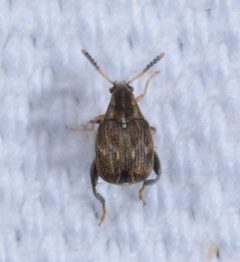
Meibomeus musculus is a of leaf beetle in the Chrysomelidae, first described by Thomas Say in 1831. It is native to North America with confirmed records from Canada (New Brunswick, Ontario, and Québec) and the United States. As a member of the leaf beetle family, it is associated with vegetation, though specific plant relationships remain undocumented. The species is represented by 54 observations on iNaturalist, indicating it is encountered with some regularity by naturalists.
Pronunciation
How to pronounce Meibomeus musculus: /ˌmaɪˈboʊmiəs ˈmʌskjʊləs/
These audio files are automatically generated. While they are not always 100% accurate, they are a good starting point.
Identification
No specific identification guidance is available to distinguish Meibomeus musculus from other Meibomeus or related leaf beetles. Examination of genitalia and other microscopic characters by a would likely be required for definitive identification.
Images
Habitat
Associated with vegetation as a leaf beetle, though specific preferences (forest type, plant , moisture requirements) are not documented. Likely occurs in habitats supporting its plants.
Distribution
North America. Documented occurrences include: Canada (New Brunswick, Ontario, Québec) and the United States. The full extent of its U.S. range is not specified in available sources.
Ecological Role
As a leaf beetle, likely functions as a herbivore in its , though specific ecological impacts are not documented.
More Details
Taxonomic History
First described by Thomas Say in 1831, a prominent early American entomologist. The Meibomeus contains multiple , though the exact number and their relationships require revision.
Data Availability
Despite being described nearly 200 years ago, basic natural history information for this remains sparse. The 54 iNaturalist observations suggest opportunities for citizen science to contribute to understanding its distribution and .