
Algarobius
Bridwell, 1946
Species Guides
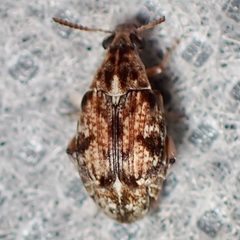
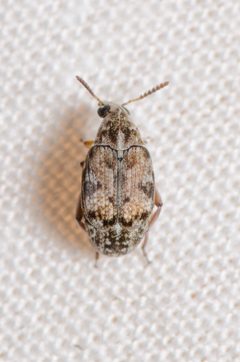
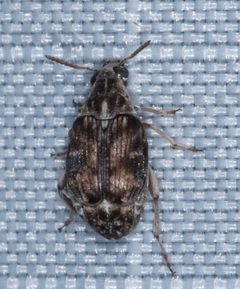
2- Algarobius bottimeri(Kiawe Bean Weevil)
- Algarobius prosopis(Prosopis Seed Beetle)
Algarobius is a of seed beetles in the Chrysomelidae, Bruchinae, comprising approximately six described . The genus is notable for its association with leguminous plants, particularly Prosopis species (mesquites). Algarobius prosopis has been widely used as a agent against mesquite weeds in South Africa. These beetles are specialized seed-feeders whose larvae develop within seeds.
Pronunciation
How to pronounce Algarobius: //ˌælgəˈroʊbiəs//
These audio files are automatically generated. While they are not always 100% accurate, they are a good starting point.
Identification
Members of Algarobius can be distinguished from other bruchine by genitalic characteristics and associations with Prosopis . The genus is closely related to other bruchine seed beetles but is distinguished by specific morphological features described in taxonomic revisions by Kingsolver. Species-level identification requires examination of male genitalia and often relies on host plant records.
Images
Habitat
Associated with arid and semi-arid environments where legumes (particularly Prosopis ) occur. include mesquite-invaded rangelands, savanna, and disturbed areas where host plants establish.
Distribution
Native to the Americas; at least one (A. prosopis) has been introduced to South Africa for of mesquites. GBIF records indicate presence in Colombia.
Diet
Seeds of leguminous plants, particularly Prosopis (mesquites). Larvae develop entirely within seeds, consuming the embryo and cotyledons.
Host Associations
- Prosopis species - primary Mesquite weeds; seeds are consumed by larvae
Life Cycle
are deposited on or near seeds or pods. Larvae bore into seeds and complete development within, feeding on seed tissues. occurs within the seed. emerge through exit holes. Development is closely tied to seed availability and quality.
Behavior
are likely short-lived and focused on and location. Larval is entirely endophytic, with feeding confined to seed interiors. Has been observed to be subject to by native in introduced ranges.
Ecological Role
Seed of leguminous plants; significant mortality agent for mesquite seeds. In introduced ranges, functions as a agent reducing plant recruitment through seed destruction. Subject to top-down control by .
Human Relevance
Used deliberately as a agent for mesquite weeds (Prosopis ) in South Africa. The introduction of A. prosopis represents a program targeting woody plant invaders. Success is influenced by interference from native .
Similar Taxa
- Other Bruchinae generaSimilar seed-feeding and ; distinguished by genitalic characteristics and specificity patterns
- AcanthoscelidesLarge bruchine with similar ; Algarobius distinguished by association with Prosopis and specific morphological features
More Details
Taxonomic History
The was established by Bridwell in 1946. Taxonomic revisions by Kingsolver in the 1970s-1980s clarified boundaries and described several new species including A. bottimeri, A. johnsoni, A. nicoya, and A. riochama.
Biocontrol Context
A. prosopis was introduced to South Africa in the early 1990s as part of a program to control Prosopis . Initial establishment was monitored for interference, which was found to limit effectiveness in some areas.