
Zabrotes
Horn, 1885
pea and bean weevils
Species Guides
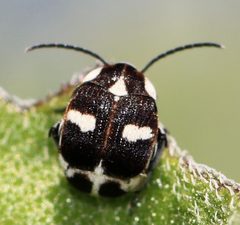
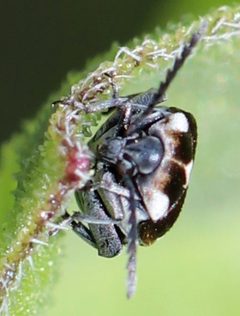
10Zabrotes is a of small bruchine beetles in the Chrysomelidae, containing over 20 described . The genus is best known for Zabrotes subfasciatus, the Mexican bean weevil, a significant pest of stored legume seeds in tropical and subtropical regions. Species in this genus are seed , with larvae developing endophytically within the cotyledons of seeds. Most research has focused on Z. subfasciatus due to its economic importance, while other species remain poorly studied.
Pronunciation
How to pronounce Zabrotes: //zəˈbroʊtiːz//
These audio files are automatically generated. While they are not always 100% accurate, they are a good starting point.
Identification
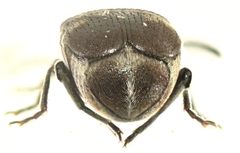
Members of Zabrotes are distinguished from other bruchine by their small body size—Z. subfasciatus is the smallest of the common stored-product bruchids. are compact beetles with the typical bruchine body plan: short, somewhat humped profile with that are serrate or pectinate in males. Specific diagnostic characters for the genus require examination of genitalia and other subtle morphological features not reliably visible in field observations.
Images
Habitat
are associated with stored legume seeds and their wild relatives. Z. subfasciatus occurs in stored beans in tropical regions and has been intercepted in imported commodities in temperate zones. Wild are associated with Phaseolus lunatus and P. vulgaris. Laboratory studies indicate development occurs at 25–27°C and 70% relative humidity.
Distribution
Native to the Americas, with Z. subfasciatus distributed through tropical regions of the Western Hemisphere. The has been introduced to other regions through commerce; documented detections include Romania from imported beans originating in Syria and Ethiopia. GBIF records indicate presence in Colombia. Full distribution of the is incompletely documented.
Diet
Larvae feed on cotyledon tissue of legume seeds. Z. subfasciatus develops on Phaseolus vulgaris (common bean), P. lunatus (lima bean), and has been observed to utilize Vigna unguiculata (cowpea), Cicer arietinum (chickpea), Lens culinaris (lentil), and Glycine max (soybean). utilization varies by and may involve trade-offs in .
Host Associations
- Phaseolus vulgaris - primary common bean, main cultivated
- Phaseolus lunatus - lima bean, wild and cultivated
- Vigna unguiculata - cowpea, utilized by some
- Cicer arietinum - chickpea, unusual with -specific
- Lens culinaris - lentil, unusual
- Glycine max - soybean, unusual
Life Cycle
are deposited on seed surfaces. Larvae hatch and penetrate directly into seeds, where they complete development feeding on cotyledon tissue. Development from egg to takes approximately 34 days at 27°C and 70% RH. Multiple larvae (up to 20) may develop within a single large seed. occurs within the seed. Adult creates characteristic exit holes. Sex ratio of emerging adults is slightly male-biased. Maximum recorded female is approximately 55 eggs.
Behavior
Females exhibit aggregated oviposition, placing multiple on selected seeds rather than distributing eggs evenly across available . Oviposition is flexible: when host seeds are unavailable or treated with certain materials (e.g., kaolin), females may deposit eggs on surrounding substrates. Host preference is determined primarily by oviposition behavior rather than larval performance, with showing heritable variation in host acceptance. Artificial selection can increase acceptance of novel hosts within relatively few .
Ecological Role
As seed , Zabrotes reduce seed viability and germination capacity. contributes to fungal and mycotoxin development in stored grains. In natural settings, they likely function as regulators for their legume plants. In agricultural systems, they are significant economic pests causing weight loss, reduced nutritional quality, and diminished seed vigor.
Human Relevance
Z. subfasciatus is an important pest of stored beans in tropical regions, causing substantial post-harvest losses. Management strategies include (, kaolin), breeding, and combining multiple tactics. The is subject to phytosanitary regulation; detections in imported commodities have occurred in Europe. Other species in the have minimal documented economic impact.
Similar Taxa
- Callosobruchus maculatusOverlapping use on cowpeas; C. maculatus is a cowpea that competes with Z. subfasciatus on shared hosts. Replacement series experiments show neither has consistent competitive advantage.
- Acanthoscelides obtectusAnother bruchine pest of Phaseolus beans with similar and ; distinguished by larger body size and different genital .
- Bruchidius glycyrhizaeSympatric bruchine detected in same Romanian survey; distinguished by association with Glycyrrhiza (licorice) rather than Phaseolus.
Sources and further reading
- BugGuide
- Wikipedia
- GBIF taxonomy match
- iNaturalist taxon
- NCBI Taxonomy
- Development, fecundity and egg dispersion of Zabrotes subfasciatus
- The ability of Zabrotes subfasciatus to attack cowpeas
- Control of the Mexican bean weevil Zabrotes subfasciatus with kaolin
- Detection of Zabrotes subfasciatus and Bruchidius glycyrhizae (Chrysomelidae: Bruchinae) in Romania
- Host preference of the bean weevil Zabrotes subfasciatus
- Transcriptional signature of host shift in the seed beetle Zabrotes subfasciatus
- New Distribution and Host Records for the GenusZabrotesHorn (Coleoptera: Bruchidae)
- The biology and control of Zabrotes subfasciatus (Boheman) (Coleoptera: Bruchidae) infesting red kidney beans
- Oviposition behavior of Zabrotes subfasciatus females (Coleoptera, Bruchidae) under conditions of host deprivation
- Combining host plant resistance and botanical insecticide for the management of Zabrotes subfasciatus (Boheman) (Coleoptera, Chrysomelidae, Bruchinae) in common bean
- Ovary Activation Dynamics in the Bean Weevil Zabrotes subfasciatus (Bruchinae): The Essential Roles of Seeds and Males.