
Perarthrus
LeConte, 1851
Species Guides
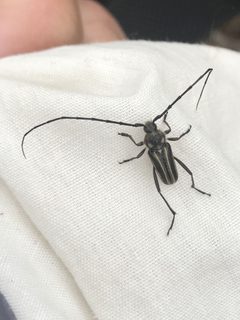
2Perarthrus is a of longhorn beetles (Cerambycidae) containing three described . of at least one species, P. linsleyi, feed exclusively on creosote bush flowers and exhibit a mating system. The genus is classified in the tribe Trachyderini, a group known for often colorful and flower-visiting species.
Pronunciation
How to pronounce Perarthrus: //pɛˈrɑːrθrəs//
These audio files are automatically generated. While they are not always 100% accurate, they are a good starting point.
Identification
Members of Perarthrus can be distinguished from related in Trachyderini by combination of characters typical of the group, though specific diagnostic features for the genus are not documented in available sources. The three (P. linsleyi, P. pallida, P. vittatus) presumably differ in coloration and markings, with P. vittatus and P. linsleyi likely showing longitudinal stripes or patterns as suggested by their epithets.
Images
Habitat
Arid and semi-arid environments where creosote bush (Larrea tridentata) occurs. For P. linsleyi, are found on flowers and foliage of this plant.
Distribution
North America; specific range details not documented in available sources, though presence of creosote bush suggests southwestern United States and adjacent Mexico.
Diet
of P. linsleyi feed on flowers of creosote bush (Larrea tridentata). Larval diet unknown; presumably internal feeding in woody plants as typical for Cerambycidae.
Host Associations
- Larrea tridentata - food plantcreosote bush; confirmed for P. linsleyi
Behavior
Males of P. linsleyi move widely and more frequently than females, actively searching for mates. Copulation occurs without preliminary courtship. Males do not defend females, flowers, or bushes. The exhibits , with mating system evolution driven by spatial distribution of food resources.
Ecological Role
function as of creosote bush through flower visitation. Larval role unknown.
Similar Taxa
- Other Trachyderini generaSimilar flower-visiting and general appearance; Perarthrus distinguished by specific morphological characters and associations
More Details
Mating system
P. linsleyi has been studied as a model for mating systems, where resource distribution rather than resource defense determines male reproductive strategy.