
Elytroleptus
Dugés, 1879
Species Guides
8Elytroleptus is a of longhorned beetles (Cerambycidae) comprising 15 distributed across the southwestern United States, Mexico, and Central America, with one species (E. floridanus) extending into the eastern United States. The genus is notable for containing lycid mimics, with three species—E. apicalis, E. ignitus, and E. limpianus—documented as on their own lycid models, representing a rare case of in beetles. A taxonomic revision in 2013 clarified species boundaries and described one new species while synonymizing three others.
Pronunciation
How to pronounce Elytroleptus: //ɛlɪˈtroʊlɛptəs//
These audio files are automatically generated. While they are not always 100% accurate, they are a good starting point.
Identification
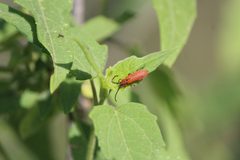
Elytroleptus are distinguished from other cerambycids by their striking orange and black coloration that mimics net-winged beetles ( Lycidae). can be separated from true lycids by their long, thread-like (often longer than the body) versus the short, serrate or pectinate antennae of lycids, and by the presence of elytral or sculpturing typical of cerambycids. The is further characterized by four unambiguous morphological synapomorphies supporting its monophyly. Species-level identification requires examination of mouthparts and genitalia; a published key is available in Grzymala & Miller (2013).
Images
Habitat
Distribution
Southwestern United States (Texas, Arizona, New Mexico, Oklahoma), Mexico, and Central America (Guatemala, Honduras, Nicaragua, Rica). Elytroleptus floridanus extends the range to the northeastern and southeastern United States, with records from Florida and a significant northwestern range extension documented in western Oklahoma.
Seasonality
have been collected in May and June in the United States, with activity associated with flowering of plants.
Diet
of at least three (E. apicalis, E. ignitus, E. limpianus) are on net-winged beetles (Lycidae), the same group they mimic. This represents , where the mimic preys upon its model. Larval diet and feeding habits are unknown.
Life Cycle
Complete with , larva, pupa, and stages. Larval development likely occurs in woody substrates given characteristics, though specific remain undocumented.
Behavior
are and have been observed flying up from flowering bushes when disturbed. Several exhibit of lycid beetles, with three species documented as aggressive mimics that actively prey upon their lycid models.
Ecological Role
As of lycid beetles, Elytroleptus may influence local lycid . Their mimicry of chemically defended lycids may also affect predator learning and interactions involving aposematic coloration.
Human Relevance
Of interest to coleopterists studying mimicry systems and cerambycid diversity. The makes the a notable example for evolutionary education.
Similar Taxa
- Lycidae (net-winged beetles)Elytroleptus are visually similar to lycids in coloration (orange and black patterns) but differ in structure (long and thread-like vs. short and serrate/pectinate) and elytral sculpturing. Elytroleptus is also behaviorally distinct as an active of lycids.
- Other TrachyderiniSome other members of the tribe share bright coloration, but Elytroleptus is distinguished by its specific lycid-mimic color pattern and documented predatory toward lycids.
Sources and further reading
- BugGuide
- Wikipedia
- GBIF taxonomy match
- iNaturalist taxon
- NCBI Taxonomy
- Catalogue of Life
- Histeridae | Beetles In The Bush
- Cimbicidae | Beetles In The Bush
- Acanthaceae | Beetles In The Bush
- Taxonomic Revision and Phylogenetic Analysis of the Genus <i>Elytroleptus</i> Dugés (Coleoptera: Cerambycidae: Cerambycinae: Trachyderini)