
Psebiini
Genus Guides
2Psebiini is a tribe of longhorn beetles in the Cerambycinae. The tribe comprises approximately 25 distributed across multiple continents, with notable diversity in the Afrotropical, Oriental, and Australasian regions. Several genera were described or revised in the 21st century, indicating ongoing taxonomic refinement. The tribe includes both small-bodied genera such as Nathrius and larger forms such as Macropsebium.
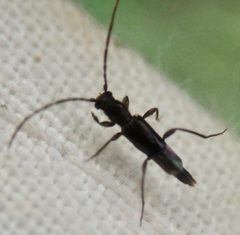
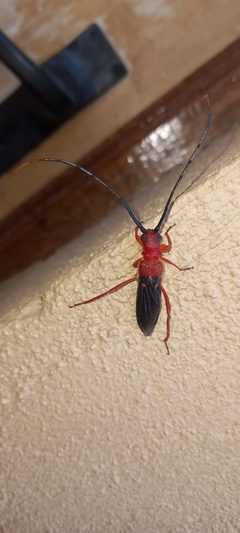
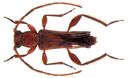
Pronunciation
How to pronounce Psebiini: /ˌpsiːˈbaɪ.aɪ.naɪ/
These audio files are automatically generated. While they are not always 100% accurate, they are a good starting point.
Identification
Psebiini can be distinguished from related cerambycine tribes by a combination of characters including the structure of the , pronotal shape, and elytral . Members typically exhibit the elongated body form characteristic of Cerambycidae, with or slightly serrate antennae. The tribe lacks the extreme antennal elongation seen in some other cerambycine groups. Specific generic-level identification requires examination of tarsal structure, antennal segment proportions, and male genitalia.
Images
Distribution
The tribe has a broad but discontinuous distribution spanning the Afrotropical region (including Madagascar), Oriental region, Australasia, and the Neotropics. Records include Africa (Capepsebium, Bottegia), Madagascar (Nesopsebium, Australopsebium), Southeast Asia and the Pacific (Malayopsebium, Haplopsebium), and the Americas (Hovorea in Mexico, Frondipedia in Brazil).
Similar Taxa
- CallichrominiSimilar elongated body form and coloration in some , but distinguished by antennal structure and lack of metallic coloration typical of many Callichromini
- CerambyciniOverlaps in general ; Psebiini generally smaller with less robust and different tarsal formula
More Details
Taxonomic History
The tribe has undergone significant revision in recent decades, with numerous described or redefined by Quentin & Villiers (1971), Adlbauer (2000), and others. The genus Dodecocerus was established in 2008 for a from French Guiana, representing one of the few Neotropical records.
Generic Diversity
The tribe exhibits substantial morphological diversity, from the minute Nathrius (approximately 5 mm) to larger Macropsebium . This diversity has complicated tribal definition, with some historically placed in other tribes.