
Curtomerus
Stephens, 1839
Species Guides
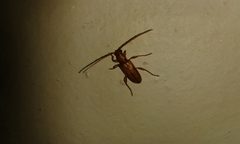
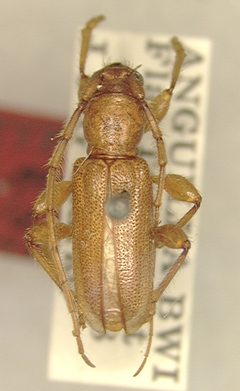
1- Curtomerus flavus(Curtomerus Longhorned Beetle)
Curtomerus is a of longhorn beetles (Cerambycidae) established by Stephens in 1839. The genus contains approximately nine described distributed across the Americas, from the United States through Central America to South America, with some species occurring on Caribbean islands. Species in this genus are classified within the Cerambycinae and tribe Callidiopini. The genus shows a predominantly Neotropical distribution pattern.

Pronunciation
How to pronounce Curtomerus: /ˈkɜːrtəʊmɛrəs/
These audio files are automatically generated. While they are not always 100% accurate, they are a good starting point.
Images
Distribution
The occurs from the southern United States (Florida) through Central America and into South America, with records from Ecuador, Bolivia, Colombia, and Brazil. Several are to Caribbean islands including Cuba and Haiti. Curtomerus flavus has the broadest distribution, spanning North, Central, and South America as well as Pacific and Caribbean islands.
More Details
Species diversity
Nine are currently recognized: C. brunneus, C. fasciatus, C. flavus, C. glaber, C. lingafelteri, C. piraiuba, C. politus, C. puncticollis, and C. purus. Two species (C. lingafelteri and C. piraiuba) were described in the 21st century, indicating ongoing taxonomic work.
Taxonomic history
The was established by British entomologist James Francis Stephens in 1839. The type is Curtomerus flavus (originally described as Cerambyx flavus by Fabricius in 1775).