
Ropalopus
Mulsant, 1839
Species Guides
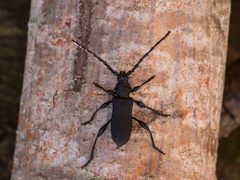
1Ropalopus is a of long-horned beetles (Cerambycidae: Callidiini) comprising approximately 20 distributed across Eurasia, with one species (R. sanguinicollis) occurring in northeastern North America. The genus has been subject to taxonomic revision, particularly the R. ungaricus/insubricus species group in the western Palaearctic, where elevation has been identified as a key factor in species delimitation alongside geographic barriers.
Pronunciation
How to pronounce Ropalopus: //roʊˈpæl.ə.pəs//
These audio files are automatically generated. While they are not always 100% accurate, they are a good starting point.
Identification
-level identification within Ropalopus, particularly in the R. ungaricus/insubricus group, requires examination of male terminalia and detailed morphological characters; identification keys are available for this species group. The can be distinguished from related Callidiini genera by morphological characters, though specific diagnostic features for the genus itself are not detailed in available sources.
Images
Distribution
Eurasia (approximately 20 ); northeastern United States and southern Canada (Ropalopus sanguinicollis only). GBIF records indicate presence in Denmark, Norway, Sweden, and Vermont, USA.
Similar Taxa
- Other Callidiini generaRopalopus may be confused with related long-horned beetles in the tribe Callidiini; detailed examination of morphological characters, particularly male genitalia, is required for accurate identification.
More Details
Taxonomic complexity
The Ropalopus ungaricus/insubricus group has undergone significant taxonomic revision, with all European now treated as of R. ungaricus rather than separate . A new subspecies, R. ungaricus occidentalis, was described from southern Spain in 2022.
Species delimitation factors
In the R. ungaricus/insubricus group, elevation above sea level has been demonstrated as a primary differentiating factor, resulting in or parapatric distributions among .
Sources and further reading
- BugGuide
- Wikipedia
- GBIF taxonomy match
- iNaturalist taxon
- NCBI Taxonomy
- Catalogue of Life
- A new subspecies of Ropalopus (Ropalopus) ungaricus (Herbst, 1784) from southern Spain, Ropalopus (Ropalopus) ungaricus occidentalis ssp. nov. (Coleoptera: Cerambycidae)
- Revision of the Ropalopus ungaricus/insubricus group (Coleoptera: Cerambycidae: Callidiini) from the western Palaearctic region