
Tropicus pusillus
(Say, 1823)
variegated mud-loving beetle
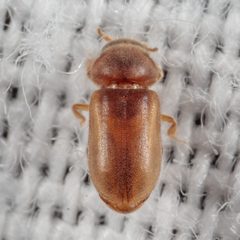
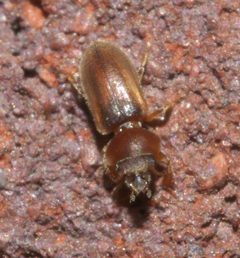
Tropicus pusillus is a of in the Heteroceridae, first described by Thomas Say in 1823. The species is found across a broad geographic range spanning the Caribbean, Central America, and North America. It is one of approximately 620 documented observations on iNaturalist, indicating it is a relatively well-recorded member of this family. The "variegated mud-loving beetle" refers to its membership in a group of beetles typically associated with muddy or moist .
Pronunciation
How to pronounce Tropicus pusillus: //ˈtroʊ.pɪ.kʊs pʊˈsɪl.lʊs//
These audio files are automatically generated. While they are not always 100% accurate, they are a good starting point.
Images
Habitat
The "mud-loving " indicates an association with muddy or moist environments, though specific microhabitat preferences for T. pusillus are not documented. Members of Heteroceridae are generally found in wet or muddy substrates, often along shorelines of streams, rivers, ponds, or in other saturated soils.
Distribution
Documented from the Caribbean Sea region, Central America, and North America. GBIF records confirm presence in the Caribbean, Middle America, and North America as present regions.
More Details
Taxonomic history
First described by Thomas Say in 1823, making it one of the earlier described in the Tropicus. The species has remained in the genus Tropicus under Heteroceridae without major taxonomic revision according to available records.