
Heteroceridae
W.S. MacLeay, 1825
Variegated Mud-loving Beetles
Genus Guides
3- Augyles(variegated mud-loving beetles)
- Heterocerus
- Tropicus(variegated mud-loving beetles)
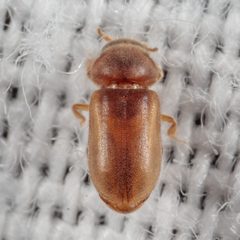
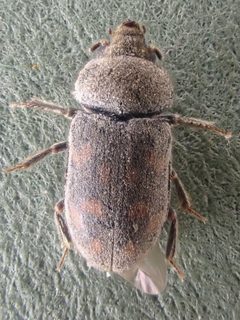
, commonly known as variegated mud-loving beetles, are a of small, dorsoventrally depressed beetles inhabiting shorelines worldwide. Approximately 250 are recognized globally, with highest diversity in tropical and subtropical regions. The family exhibits remarkable phenotypic uniformity in external , making species identification difficult without examination of male genitalia. These beetles construct shallow tunnels in damp soils and have been documented on every continent except Antarctica.
Pronunciation
How to pronounce Heteroceridae: //ˌhɛtərəʊˈsɛrɪdiː//
These audio files are automatically generated. While they are not always 100% accurate, they are a good starting point.
Identification
identification relies heavily on male genitalia characteristics due to conserved external . Females cannot be reliably identified to species using current taxonomic keys. The can be distinguished from superficially similar small scarabs by the combination of dorsoventral flattening, spined tibiae, and shoreline association. Molecular data supports recognition of five : Augyles, Heterocerus, Micilus, Elythomerus, and Tropicus.
Images
Habitat
Shoreline inhabitants of fresh and brackish water bodies including lakes, rivers, and ponds. Construct shallow tunnels in damp, sandy, or muddy soils. Documented from intertidal sandflats and remote oceanic islands. In Russia, found in of waterbodies with studied structure in the north of the Lower Volga region.
Distribution
distribution occurring on every continent except Antarctica. Most diverse in tropical and subtropical regions. In the New World, 87 are recorded including 34 from the United States. Documented from European Russia, Caucasus, Ural, West Siberia, Russian Far East, Azerbaijan, Kyrgyzstan, Tajikistan, Uzbekistan, Mongolia, North Ossetia, Khakassia, and Iran. First records from Russia include Augyles interspidulus, A. tokejii, A. turanicus, A. marmota, and Heterocerus kaszabi.
Seasonality
active from spring through autumn; in Khakassia, collected from March 31 to October 13. Seasonal dynamics and hibernation documented for some in Russian .
Diet
Thought to be , consuming substrate to sift for organic matter, microorganisms, and .
Life Cycle
Hibernation occurs in some . Seasonal dynamics documented in Russian . Specific details of , larval, and pupal stages not well described in available literature.
Behavior
Construct shallow tunnels in damp soil. Attracted to ultraviolet light sources, with collections in Russia made using UV lamps with 2–13 hours of exposure. Exhibit (burrowing) using spined tibiae.
Ecological Role
Important prey for passerine birds and frogs. Play significant role in seed and burial in sandy soils. Position in of riparian documented in European Russia and Mongolia; main trophic links within -related communities recorded. Serve as phoretic for mites of Neopygmephoridae and Scutacaridae.
Human Relevance
Occasionally attracted to artificial light sources at night, where they may be encountered by observers. Not considered agricultural or medical pests. Presence indicates healthy shoreline .
Similar Taxa
- ScarabaeidaeSuperficial resemblance in body form, but distinguished by preference, flattened tibial spines, and shoreline association.
- DryopidaeShared superfamily Dryopoidea and aquatic/semi-aquatic , but Dryopidae typically have more cylindrical bodies and different leg structure.
More Details
Taxonomic History
The has undergone repeated generic revision. Francisco Pacheco (1964) proposed 20 based primarily on male genitalia, but this system was deemed complex and impractical due to high genus-to- ratio and inability to identify females. Most systematists now recognize five genera worldwide (Augyles, Heterocerus, Micilus, Elythomerus, Tropicus), supported by molecular phylogenetic analyses.
Molecular Phylogenetics
Molecular studies using 28S and EF-1α sequence data support Tropicus as sister group to all other . The synonymy of North American Lapsus tristis and European Heterocerus fenestratus is supported by molecular data. Many proposed based on genitalia are polyphyletic, confirming the artificial nature of Pacheco's classification.
Fossil Record
Oldest fossils attributed to the are from the Early Cretaceous (Aptian) of China and Mongolia, assigned to the Heterocerites.
Sources and further reading
- BugGuide
- Wikipedia
- GBIF taxonomy match
- iNaturalist taxon
- NCBI Taxonomy
- Catalogue of Life
- Bug Eric: National Moth Week Recap for Colorado Springs
- Bug Eric: Remembering National Moth Week 2018
- Bug Eric: October 2018
- Molecular data resolves relationships within Heteroceridae (Coleoptera: Dryopoidea)
- NEW DATA ON DYTISCIDAE, HYDROPHILIDAE, HYDRAENIDAE, DRYOPIDAE AND HETEROCERIDAE (COLEOPTERA) OF NORTH OSSETIA
- RESULTS OF THE STUDY OF BEETLES OF THE FAMILY HETEROCERIDAE (COLEOPTERA) IN RUSSIA AND NEIGHBORING TERRITORIES (2015–2019)
- New data on the fauna of Heteroceridae (Coleoptera) of the Republic of Khakassia (Eastern Siberia)
- Annotated checklist of Dryopidae and Heteroceridae (Coleoptera: Byrrhoidea) of Iran
- Distribution of three Augyles species of the «cribratellus» species-group (Coleoptera: Heteroceridae) in the territories of Russia and neighboring countries
- Mites of the families Neopygmephoridae and Scutacaridae associated with variegated mud-loving beetles (Coleoptera: Heteroceridae) from Russia and Kazakhstan
- Variegated mud-loving beetles (Heteroceridae) of Russia and adjacent countries: genus Augyles of European part of Russia and Caucasus Region
- An annotated checklist of the aquatic Polyphaga (Coleoptera) of Egypt III. Families: Helophoridae, Georissidae, Hydrochidae, Spercheidae, Scirtidae, Elmidae, Dryopidae, Limnichidae and Heteroceridae