
Pelonomus
Erichson, 1847
long-toed water beetles
Species Guides
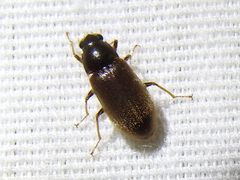
1- Pelonomus obscurus(long-toed water beetle)
Pelonomus is a of long-toed water beetles in the Dryopidae, first described by Erichson in 1847. The genus contains approximately five described distributed primarily in the Americas. These beetles are associated with aquatic or semi-aquatic . Members of this genus are characterized by elongated adapted for clinging to submerged substrates.
Pronunciation
How to pronounce Pelonomus: //peˈloʊ.nə.məs//
These audio files are automatically generated. While they are not always 100% accurate, they are a good starting point.
Identification
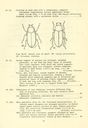
Pelonomus can be distinguished from other dryopid by their elongated with long, slender claws—adaptations for gripping in flowing water. The genus is characterized by a somewhat elongate body form and that are relatively short compared to body length. Species-level identification within Pelonomus requires examination of male genitalia and subtle differences in elytral and coloration.
Images
Habitat
Associated with freshwater , particularly streams and rivers. are typically found on submerged rocks, wood, or other debris in running water.
Distribution
Recorded from South America (Colombia: Amazonas, Antioquia, Boyacá departments) and North America (based on descriptions from the United States).
Similar Taxa
More Details
Species diversity
The contains five described : P. griseus, P. impressiventris, P. obscurus, P. palpalis, and P. picipes. P. picipes, described by Olivier in 1791, is the oldest described species in the genus.
Taxonomic history
The was established by Wilhelm Ferdinand Erichson in 1847. The Dryopidae, to which Pelonomus belongs, is part of the superfamily Dryopoidea within the infraorder Elateriformia.