
Ptosima
Dejean, 1833
Redbud Borers, jewel beetles
Species Guides
4- Ptosima gibbicollis(Redbud Borer)
- Ptosima idolynae
- Ptosima laeta(Texas redbud borer)
- Ptosima walshii
Ptosima is a of jewel beetles ( Buprestidae) in the Polycestinae. The genus contains approximately 12 described distributed across multiple continents. One species, Ptosima undecimmaculata, is a documented agricultural pest of grapevines, with larvae boring into stems and roots. of at least some species feed on leaves and shoots of plants. The "Redbud Borers" suggests association with Cercis (redbud) trees for certain species, though this relationship requires confirmation.
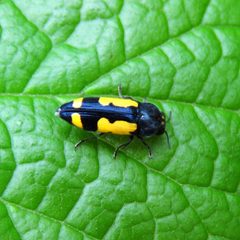
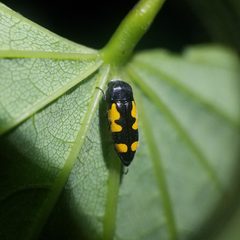
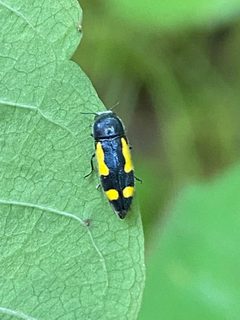
Pronunciation
How to pronounce Ptosima: //təˈsiːmə//
These audio files are automatically generated. While they are not always 100% accurate, they are a good starting point.
Identification
Identification to level requires examination of specific morphological characters including elytral maculation patterns, body proportions, and genitalic structures. The can be distinguished from other Polycestinae by combinations of antennal serration, prosternal process shape, and tarsal claw structure. Species-level identification relies heavily on the number and arrangement of elytral spots or fasciae.
Images
Habitat
vary by . Ptosima undecimmaculata occurs in vineyard where grapevines (Vitis spp.) are cultivated. Other species likely occupy woodland and forest habitats associated with their respective plants, though specific habitat data for most species is not readily accessible.
Distribution
The has a wide geographic range with recorded from North America (Ptosima gibbicollis, Ptosima walshii, Ptosima schaeffer, Ptosima sylvatica), Europe and western Asia (Ptosima undecimmaculata), India (Ptosima indica), China (Ptosima chinensis), and Southeast Asia (Ptosima bowringii, Ptosima laeta).
Seasonality
activity for Ptosima undecimmaculata occurs during the grapevine growing season, with tied to plant . Seasonal patterns for other are not well documented in available sources.
Diet
Ptosima undecimmaculata larvae feed internally on grapevine (Vitis spp.) stems and roots; feed on grapevine leaves and shoots. Feeding habits of other in the are not documented in available sources.
Host Associations
- Vitis spp. - larval , food plantgrapevine; confirmed for Ptosima undecimmaculata only
Life Cycle
Complete with , larva, pupa, and stages. For Ptosima undecimmaculata: eggs are laid in bark crevices or wounds on grapevine stems; larvae bore into stems and roots where they develop; occurs within the plant tissue. details for other are not documented.
Behavior
Larvae of Ptosima undecimmaculata exhibit boring within grapevine stems and roots, causing structural damage. feed externally on plant foliage. Other behavioral traits for the are not documented in available sources.
Ecological Role
Ptosima undecimmaculata functions as an agricultural pest in vineyard , causing economic damage through larval boring damage to grapevines. No beneficial ecological roles have been documented for this or in available sources.
Human Relevance
Ptosima undecimmaculata is recognized as a pest of cultivated grapevines, with larvae causing damage that can reduce vine productivity. The "Redbud Borers" suggests potential association with ornamental Cercis trees, though economic impact on these is not documented. Other in the do not have documented human relevance.
Similar Taxa
- AgrilusBoth are Buprestidae with wood-boring larvae; Agrilus is far more speciose and economically significant, but similar in general body form and larval habits. Ptosima can be distinguished by Polycestinae characters including antennal and prosternal features.
- ChrysobothriaAnother Polycestinae with similar ; Chrysobothria typically have distinct elytral sculpturing and different associations.
More Details
Taxonomic note
The was established by Dejean in 1833. The type is Ptosima undecimmaculata (Herbst, 1784), originally described in the genus Buprestis.
Research gap
Most in the lack published biological studies. Available ecological and information is heavily biased toward Ptosima undecimmaculata due to its agricultural significance.