
Acmaeodera simulata
Van Dyke, 1937
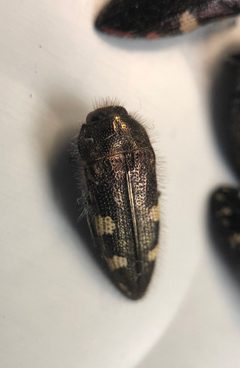
Acmaeodera simulata is a of metallic wood-boring beetle in the Buprestidae. It was described by Van Dyke in 1937 and is found in North America. Like other members of the Acmaeodera, are typically flower visitors that feed on pollen. The species belongs to a large and taxonomically challenging genus of jewel beetles, with approximately 149 species and recognized in North America.
Pronunciation
How to pronounce Acmaeodera simulata: //ˌækmiˈoʊˌdɛrə sɪˈmjuːˌleɪtə//
These audio files are automatically generated. While they are not always 100% accurate, they are a good starting point.
Images
Distribution
North America. GBIF records indicate presence in the Nearctic region with confirmed occurrences in North America. Specific locality data beyond continental distribution is not documented in available sources.
More Details
Taxonomic context
Acmaeodera is a taxonomically difficult with approximately 149 / in North America. The genus has not been comprehensively revised since the early 20th century, making species-level identification challenging without comparison to reference specimens or consultation.
Sources and further reading
- BugGuide
- Wikipedia
- GBIF taxonomy match
- iNaturalist taxon
- Catalogue of Life
- Rosaceae | Beetles In The Bush | Page 2
- mountains | Beetles In The Bush
- An uncommon fall-active Acmaeodera | Beetles In The Bush
- Acmaeodera carlota in northern Arizona | Beetles In The Bush
- Introducing Acmaeodera chuckbellamyi | Beetles In The Bush
- A flower visiting jewel beetle that is not an Acmaeodera | Beetles In The Bush