
Dicerca tenebrosa
(Kirby, 1837)
flatheaded conifer borer, Dark Jewel Beetle
Species Guides
2Dicerca tenebrosa, commonly known as the flatheaded conifer borer, is a metallic wood-boring beetle in the Buprestidae. It is found across North America, particularly in and montane regions. The is associated with coniferous trees, especially pines, and has been observed on dead or dying Pinus ponderosa and Pinus monophylla. Two are recognized: D. t. tenebrosa and D. t. knulli.
Pronunciation
How to pronounce Dicerca tenebrosa: /daɪˈsɜːrkə tɛnɪˈbroʊsə/
These audio files are automatically generated. While they are not always 100% accurate, they are a good starting point.
Identification
Dicerca tenebrosa can be distinguished from similar Dicerca by examination of the basal antennomeres and last sternum. The species is associated with conifers, whereas many breed in hardwoods. D. pugionata mines living stems of shrubs (alder, witch-hazel, ninebark), and D. lurida prefers hickories (Carya). D. tenebrosa has been reported from Alberta and British Columbia, with D. t. knulli described by Nelson in 1975.
Images
Appearance
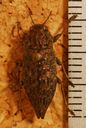
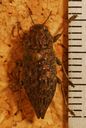
are elongate, cylindrical beetles with metallic coloration typical of the Buprestidae . The exhibits cryptic coloration that provides camouflage against tree bark. Like other Dicerca species, pinned specimens display brilliant metallic gaudiness that belies their near-invisibility on trees. Specific coloration details for this species are not separately documented from .
Habitat
Associated with coniferous forests, particularly ponderosa pine and pinyon-juniper woodlands. have been observed on dead or dying Pinus ponderosa trunks and recently wind-thrown branches of Pinus monophylla. Occurs in montane and forest zones.
Distribution
North America. Documented from Alberta and British Columbia in Canada, and across the western United States including Arizona (Kaibab National Forest, Coconino County), Utah, and Nevada (Spring Mountains, Kyle Canyon).
Seasonality
active during warmer months. Observed in early June in Arizona at approximately 7000 ft elevation. Activity patterns likely vary with elevation and latitude.
Host Associations
- Pinus ponderosa - larval observed on dead/dying trunks, females probing cracks and crevices with ovipositor
- Pinus monophylla - larval found on recently wind-thrown branches
- Abies concolor - larval found on small, recently dead tree
Life Cycle
Larvae are wood-borers, developing in dead or dying coniferous wood. colonize freshly killed trees and branches while wood remains hard. Specific developmental timing not documented.
Behavior
are cryptic, spending time on bark of trees where their coloration renders them nearly invisible. Females have been observed searching trunks and probing cracks with their ovipositor. Adults may be active throughout the year, with some Dicerca known to hibernate under loose bark during winter.
Ecological Role
Decomposer and nutrient cycler in coniferous forest . Contributes to breakdown of dead and dying wood. Serves as prey for woodpeckers and other .
Human Relevance
May be of interest to foresters monitoring conifer health, though not documented as a significant pest. Collected by entomologists for scientific study and sequencing research.
Similar Taxa
- Dicerca pugionataSimilar appearance; distinguished by preference (living stems of shrubs vs. conifers) and structural characters of and sternum
- Dicerca luridaSimilar appearance; distinguished by association with hickories (Carya) rather than conifers
- Dicerca obscuraSimilar appearance; widespread and common, distinguished by associations and structural characters
More Details
Subspecies
Two recognized: Dicerca tenebrosa tenebrosa (Kirby, 1837) and Dicerca tenebrosa knulli Nelson, 1975
Research value
Specimens have been collected for sequencing studies by researchers conducting molecular analyses of Buprestidae