Melanophilini

Melanophilini

Classification

Pronunciation

How to pronounce Melanophilini: /mɛˌlænəˈfɪlɪniː/

These audio files are automatically generated. While they are not always 100% accurate, they are a good starting point.

Images

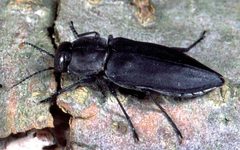
Melanophila acuminata by AG Prof. Schmitz. Used under a CC BY-SA 2.5 license.
Melanophila acuminata (De Geer, 1774) (23201868195) by Udo Schmidt from Deutschland. Used under a CC BY-SA 2.0 license.
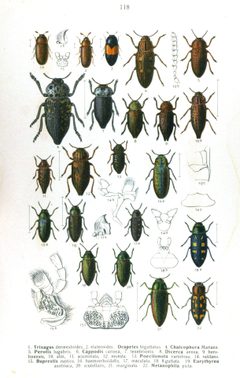
Reitter-1911-plate118 by Edmund Reitter
. Used under a Public domain license.
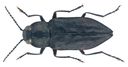
Melanophilini (53129368442) by Gilles San Martin from Namur, Belgium. Used under a CC BY-SA 2.0 license.
Melanophila consputa P1030379a by 
xpda. Used under a CC BY-SA 4.0 license.
Phaenops knoteki Reitter, 1898 by URSchmidt. Used under a CC BY-SA 4.0 license.

Summary

Melanophilini is a tribe of metallic wood-boring beetles, consisting of at least 22 species classified into 4 genera in North America and possesses significant ecological importance due to their role in wood decomposition.

Physical Characteristics

Metallic coloration typical of wood-boring beetles; some species may exhibit varying levels of iridescence.

Identification Tips

Look for the distinctive metallic shine and elongated bodies typical of beetles in the Buprestidae family.

Habitat

Melanophilini beetles are often found in forested areas where they inhabit decaying wood or trees.

Distribution

Worldwide except the Neotropics; distributed throughout North America with one known species in Australia.

Diet

Larvae primarily feed on decaying wood, while adults may feed on floral nectar.

Life Cycle

Life cycle includes egg, larval, pupal, and adult stages, typically spending a significant amount of time in the larval stage developing within wood.

Reproduction

Reproduction often involves laying eggs in or on decaying wood, where larvae will develop.

Predators

Natural predators include birds and other insectivorous animals.

Ecosystem Role

Melanophilini beetles play a critical role in the decomposition of wood, aiding in nutrient recycling in forest ecosystems.

Economic Impact

Their wood-boring habits can lead to damage in forestry and timber industries, but they also contribute to healthy forest ecosystems.

Collecting Methods

  • Visual inspection of decaying wood
  • Light traps to attract adults during their active periods

Preservation Methods

  • Drying specimens for morphological studies
  • Use of ethanol for DNA analysis

Evolution

Melanophilini has evolved specialized traits for wood boring and adaptation to decaying woody substrates.

Misconceptions

Often confused with other wood-boring beetles; their metallic appearance can be mistaken for other beetles without wood-boring habits.

Tags

  • Buprestidae
  • wood-boring beetles
  • ecological role
  • North America