
Chrysobothris octocola
LeConte, 1858
Chrysobothris octocola is a metallic wood-boring beetle ( Buprestidae) native to the southwestern United States and Mexico. The is strongly associated with mesquite (Prosopis glandulosa), where are found on dead or stressed branches and larvae develop in the wood. It represents a notable range extension into Oklahoma, where it was first documented in 2012. The species exhibits fall adult activity and has been collected in association with juniper in some areas, though mesquite remains the primary documented .
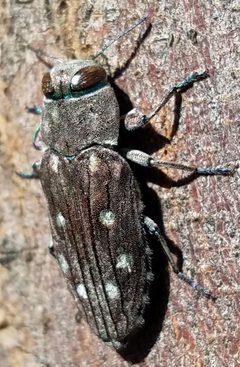
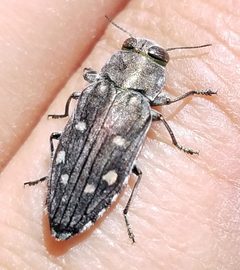
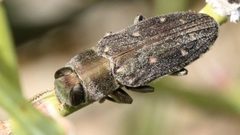
Pronunciation
How to pronounce Chrysobothris octocola: /ˌkrɪsoʊˈbɒθrɪs ɒkˈtoʊkɒlə/
These audio files are automatically generated. While they are not always 100% accurate, they are a good starting point.
Identification
are small to medium-sized jewel beetles with metallic coloration typical of the Chrysobothris. The specific epithet "octocola" (eight-dwelling) may refer to pattern elements, though precise diagnostic features for field identification from related are not well documented in available sources. Specimens from Oklahoma were recognized by association with the known plant Prosopis glandulosa and geographic context rather than distinctive morphological characters alone. Accurate identification to species level typically requires examination of structural details such as pronotal and elytral sculpturing, for which keys are necessary.
Images
Habitat
Arid and semi-arid regions of the southwestern United States and northern Mexico. In Oklahoma, found in the Gloss Mountains area at the northeastern edge of its range. Associated with mesquite-dominated and sand dune where mesquite occurs. have been beaten from both dead branches and living trees showing branch dieback or stress.
Distribution
Native to southwestern North America. Documented from Texas, New Mexico, Arizona, and surrounding states, extending south into Mexico. Notable northeastern range extension into northwestern Oklahoma (Major County, Woodward County), first recorded in 2012. GBIF records indicate presence in Central America, North America, and Oceania (including Hawaii), though the Hawaii occurrence may represent introduction or misidentification requiring verification.
Seasonality
active in fall (September-October) based on Oklahoma collections. Spring activity also reported from southwestern locations. The shows a pattern of associated with rainfall events that trigger insect activity in arid .
Host Associations
- Prosopis glandulosa - larval Primary ; larvae develop in dead or dying branches. found on both dead branches and stressed living trees with bleeding sap.
- Juniperus monosperma - occurrence beaten from juniper in New Mexico, though mesquite appears to be the primary reproductive .
Life Cycle
Larvae are wood-borers that develop in dead or dying branches of plants. Larval galleries have been observed in mesquite branches showing external signs of such as bleeding sap. emerge from infested wood. Specific details of -laying , larval instars, and are not documented in available sources.
Behavior
are and have been collected by beating dead or stressed branches of plants onto sheets. They are active flyers and can be difficult to capture when disturbed, particularly in windy conditions. In Oklahoma, adults were found in strict association with mesquite, suggesting strong host fidelity.
Ecological Role
As a wood-boring , contributes to the decomposition of dead and stressed woody material in mesquite-dominated . May serve as an indicator of tree stress or drought conditions, as have been associated with branch dieback in living trees.
Human Relevance
Minor significance as a potential pest of mesquite in managed or ornamental settings, though primarily associated with native vegetation. The 2012 Oklahoma discovery represented a new state record and was featured on the cover of The Coleopterists Bulletin, highlighting its scientific interest for documenting range extensions. The has been used as an example of understudied southwestern diversity expanding into the southern Great Plains.
Similar Taxa
- Chrysobothris ignicollisAlso associated with Juniperus in western North America, but smaller in size and with different elytral sculpturing. C. octocola is more robust and primarily associated with Prosopis rather than Juniperus as a larval .
- Chrysobothris texanaAnother western Juniperus-associated that can occur sympatrically. C. octocola can be distinguished by preference for Prosopis and differences in body proportions, though precise separation requires specimen examination.
- Other Chrysobothris species on ProsopisSeveral Chrysobothris utilize mesquite; accurate identification to C. octocola requires attention to size, coloration, and structural details of the pronotum and , with reference to literature.
More Details
Oklahoma state record significance
The 2012 discovery in the Gloss Mountains represented a range extension of over 200 miles from the nearest previously documented locality in north-central Texas, where the had not been recorded since 1956. This finding was published as a new state record and featured on the September 2013 cover of The Coleopterists Bulletin.
Collection methodology
Successful collection relies on beating dead or stressed mesquite branches during periods of activity, particularly following rainfall events that trigger . The can be abundant where present but is easily missed due to its small size and rapid response when disturbed.
Sources and further reading
- BugGuide
- Wikipedia
- GBIF taxonomy match
- iNaturalist taxon
- Catalogue of Life
- The ever-increasing diversity of Oklahoma beetles | Beetles In The Bush
- Cover Photo—The Coleopterists Bulletin 67(3) | Beetles In The Bush
- Plionoma suturalis in Oklahoma—a new state record! | Beetles In The Bush
- sun spiders | Beetles In The Bush
- 9th Annual Fall Tiger Beetle Trip: Day 3.1 | Beetles In The Bush
- Descriptions of SomeChrysobothrisLarvae (Coleoptera: Buprestidae) Occurring in the United States and Mexico