
Chrysobothris chalcophoroides
Horn, 1886
sculptured oak borer
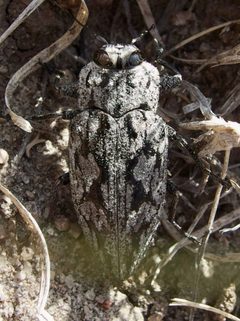
Chrysobothris chalcophoroides, commonly known as the sculptured oak borer, is a metallic wood-boring beetle in the Buprestidae. The was described by Horn in 1886 and is distributed across North America. Like other members of its , it develops in oak wood, with active during warmer months. The species exhibits the characteristic metallic coloration and sculptured typical of Chrysobothris.
Pronunciation
How to pronounce Chrysobothris chalcophoroides: //ˌkɹaɪsoʊˈbɒθɹɪs ˌkælkəˌfɔːrɔɪdiːz//
These audio files are automatically generated. While they are not always 100% accurate, they are a good starting point.
Identification
The can be distinguished from similar Chrysobothris by its resemblance to Chalcophora species, as reflected in its specific epithet. From true Chalcophora species, it can be separated by -level characters. Within Chrysobothris, identification to species level requires examination of specific sculpturing patterns and genitalia. It may be confused with other oak-associated Chrysobothris species such as C. femorata or C. mali, but specific distinguishing characters are not detailed in available sources.
Images
Appearance
exhibit the metallic coloration and sculptured characteristic of the Chrysobothris. The specific epithet "chalcophoroides" refers to its resemblance to in the related genus Chalcophora. Detailed morphological descriptions are not readily available in the provided sources.
Habitat
Associated with oak woodlands and forests. are found on oak trees (Quercus spp.), particularly in areas with dead or dying wood suitable for larval development. The occupies temperate forest and woodland across its range.
Distribution
North America. Specific range details beyond continental distribution are not provided in available sources.
Seasonality
are active during warmer months, typical for temperate Buprestidae. Specific period data are not available in provided sources.
Host Associations
- Quercus arizonicus - larval have been sought by beating Arizona oaks in lower Madera Canyon, Arizona
Life Cycle
Larval development occurs in oak wood. emerge and are active on trees. Specific details of developmental stages, timing, or are not provided in available sources.
Behavior
are alert and quick to fly when disturbed, typical of Chrysobothris . They are and active on tree trunks and branches. The species has been sought by beating oak branches, suggesting adults occupy foliage and branches rather than remaining strictly on boles.
Ecological Role
As a wood-boring , larvae contribute to decomposition of dead and dying oak wood, recycling nutrients in forest . may serve as prey for visual including birds and reptiles.
Human Relevance
No specific economic or medical significance is documented. As with many Buprestidae, it may be incidentally encountered by entomologists and naturalists studying oak-associated insects.
Similar Taxa
- Chrysobothris femorataBoth are oak-associated Chrysobothris with similar habits and preferences; specific distinguishing characters require detailed examination
- Chrysobothris maliAnother oak-associated with overlapping distribution and
- Chalcophora virginiensisResembled in appearance as indicated by specific epithet "chalcophoroides"; distinguished by -level characters and association differences (C. virginiensis is pine-associated)
More Details
Etymology
The specific epithet "chalcophoroides" derives from Greek "chalkos" (/bronze) + "phoros" (bearing) + "-oides" (resembling), referring to the ' resemblance to the Chalcophora.
Collection history
The has been specifically sought by collectors in Arizona oak , including documented attempts in lower Madera Canyon, Santa Rita Mountains, where it was targeted by beating Quercus arizonicus branches.