
Trachykele
Marseul, 1865
Species Guides
6- Trachykele blondeli(western cedar borer)
- Trachykele fattigi
- Trachykele hartmani(Serpentine Cypress Wood-boring Beetle)
- Trachykele lecontei
- Trachykele nimbosa(nimbose buprestid)
- Trachykele opulenta
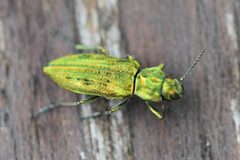
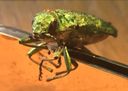
Trachykele is a of jewel beetles ( Buprestidae) containing six described distributed in North America. The genus belongs to the subtribe Trachykelina within the tribe Buprestini. At least one species, Trachykele blondeli, has been documented developing in red cedar (Thuja plicata) in western North America, with larvae feeding internally in the wood and emerging from trees. The genus is part of the diverse metallic woodboring fauna of the Nearctic region.
Pronunciation
How to pronounce Trachykele: /træˈkɪkəlɛ/
These audio files are automatically generated. While they are not always 100% accurate, they are a good starting point.
Identification
Members of Trachykele can be distinguished from other Buprestidae by their placement in the subtribe Trachykelina, characterized by specific morphological features of the and elytral structure. -level identification requires examination of subtle differences in elytral , coloration, and male genitalia. Trachykele lecontei, the type species, can be distinguished from by its distinctive elytral patterning.
Images
Habitat
Associated with coniferous trees; specifically documented from red cedar (Thuja plicata) for T. blondeli in coastal British Columbia.
Distribution
North America. Documented from British Columbia (Pender Harbour) for T. blondeli; other occur across various regions of the United States including Mississippi, Missouri, and eastern states based on collection records.
Seasonality
of T. blondeli have been recorded emerging from red cedar trees beginning in late spring (cages constructed prior to April 30, with recorded thereafter).
Diet
Larvae bore in wood of coniferous trees; specifically documented feeding in red cedar (Thuja plicata) for T. blondeli. feeding habits are not documented.
Host Associations
- Thuja plicata - larval red cedar; documented for T. blondeli in British Columbia
Life Cycle
Internal feeder in wood as larva; larval stage duration has been studied using caged trees. emerge from trees. Specific timing of larval development and not fully documented.
Behavior
Larvae are wood-borers; emerge from material. No other specific documented.
Ecological Role
Wood-boring larvae contribute to decomposition of dead and dying coniferous trees; may serve as prey for woodpeckers and other .
Human Relevance
Not documented as a significant pest; T. blondeli has been studied for its basic but lacks economic importance records.
Similar Taxa
- BuprestisBoth belong to tribe Buprestini and share metallic coloration and wood-boring habits; Trachykele distinguished by subtribe-level characters (Trachykelina vs. Buprestina)
- ChrysobothrisSimilar size and wood-boring ; distinguished by tribal placement (Chrysobothrini vs. Buprestini) and structural features of the prosternal process