
Anthaxia dichroa
Bílý, 1991
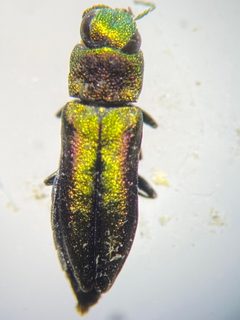
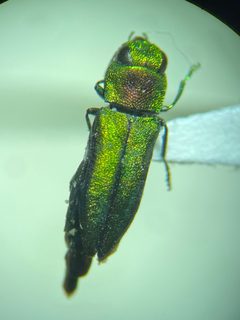
Anthaxia dichroa is a metallic wood-boring beetle ( Buprestidae) described by Bílý in 1991. It is found in North America and has been documented in ethanol-only traps in Illinois, where it occurs alongside related Anthaxia . The Anthaxia includes species associated with Cercocarpus (mountain mahogany) and other woody , though specific host relationships for A. dichroa remain unconfirmed.
Pronunciation
How to pronounce Anthaxia dichroa: /ænˈθæksiə daɪˈkroʊə/
These audio files are automatically generated. While they are not always 100% accurate, they are a good starting point.
Identification
Anthaxia dichroa belongs to the Anthaxia, whose members are typically small to medium-sized jewel beetles with metallic coloration. Within the genus, identification requires examination of specific morphological characters including elytral , color pattern, and genitalic structures. The specific epithet 'dichroa' suggests two-colored appearance, though this is inferred from etymology rather than explicit description.
Images
Distribution
North America; specifically documented from Illinois (Salt Lick Point Land & Water Preserve) in the central United States. GBIF records indicate broader presence across Nearctic, Neotropic, Indomalaya, Palearctic, and Afrotropic realms, though these may represent taxonomic confusion with related .
Seasonality
have been collected in mid-July in Illinois, suggesting summer activity.
Behavior
have been captured in ethanol-baited traps, indicating attraction to fermentation volatiles. This is consistent with many Buprestidae that are attracted to stressed or dying wood.
Similar Taxa
- Anthaxia cyanellaSimilar small size and metallic coloration; both occur in North American deciduous forests and have been collected in traps. A. cyanella is specifically associated with Betulaceae (river birch), providing a potential ecological reference point.
- Anthaxia viridicornis groupRelated in the same with similar general ; MacRae (2006) discussed variation in this group, which may aid in distinguishing A. dichroa.
Sources and further reading
- BugGuide
- GBIF taxonomy match
- iNaturalist taxon
- Catalogue of Life
- Art and Bob and Ted’s Excellent Adventure | Beetles In The Bush
- August | 2022 | Beetles In The Bush
- A flower visiting jewel beetle that is not an Acmaeodera | Beetles In The Bush
- Winter Botany Quiz #6 – answers and a checklist | Beetles In The Bush
- The perfectly polyphagous Chrysobothris purpureovittata | Beetles In The Bush
- Hiking at Don Robinson State Park | Beetles In The Bush