
Anthaxia caseyi
Obenberger, 1914
Species Guides
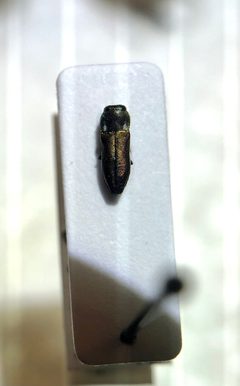
3Anthaxia caseyi is a metallic wood-boring beetle in the Buprestidae, native to North America. The was described by Obenberger in 1914 and includes four recognized . Field observations indicate are flower visitors, particularly associated with Purshia standsburyana (Stansbury's cliffrose) and other flowering plants in western North American .
Pronunciation
How to pronounce Anthaxia caseyi: /ænˈθæksiə ˈkeɪsii/
These audio files are automatically generated. While they are not always 100% accurate, they are a good starting point.
Identification
A. caseyi belongs to the subgenus Haplanthaxia within Anthaxia. The can be distinguished from related by subtle morphological features of the pronotum and elytral . determination requires detailed examination and comparison with , as some in Utah and Arizona may not clearly align with currently recognized subspecies.
Images
Habitat
Associated with western North American shrublands and open woodlands. have been collected from flowering stands of Purshia standsburyana (Stansbury's cliffrose) in fire-impacted areas showing recovery vegetation. Occurs in transition zones between ponderosa pine forest and juniper/pinyon/oak woodland at elevations around 7000 feet.
Distribution
North America. Documented from the southwestern United States including Arizona, Utah, and surrounding regions. The four named have type localities suggesting broader distribution across western North America: A. c. caseyi (described 1914), A. c. pseudotsugae (Utah/Colorado region, 1928), A. c. santarosae (Arizona, 1958), and A. c. sublaevis (western North America, 1916).
Seasonality
active in early season; observed in June in northern Arizona and southern Utah. Activity appears to increase with warming temperatures, though specific period varies with elevation and local conditions.
Host Associations
- Purshia standsburyana - flower visitor collected from flowers; may serve as nectar source or incidental site
Behavior
are flower visitors. When disturbed, buprestid beetles typically exhibit rapid, evasive . Specific behavioral observations for this are limited beyond flower-visiting activity.
Ecological Role
contribute to pollination as incidental flower visitors. Larval unknown, but buprestid larvae typically develop in woody plant tissues, contributing to nutrient cycling and creating for other organisms.
Similar Taxa
- Anthaxia (Haplanthaxia) sublaevisFormerly treated as a of A. caseyi (A. c. sublaevis), now sometimes considered distinct; requires careful examination of elytral and pronotal characters
- Other Anthaxia species contains numerous small, metallic with overlapping distributions; accurate identification requires reference to specialized keys and type comparisons
More Details
Subspecies taxonomy
Four are currently recognized, though some in Utah and Arizona may not be clearly assignable to any of these. The subspecies A. c. sublaevis was described by Van Dyke in 1916 and has been treated as both a subspecies and a distinct in different taxonomic treatments.
Collection method
Best collected by beating flowering plants, particularly Purshia standsburyana. are quick to dodge to the backside of branches and flee when alarmed, requiring stealthy approach.