
Brachys floricola
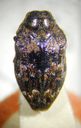
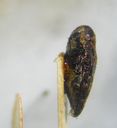
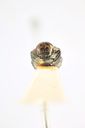
Brachys floricola is a small metallic wood-boring beetle in the Buprestidae, native to North America and primarily found in the continental United States. It belongs to the Brachys, a group characterized by flattened, compact, wedge-shaped bodies and leaf-mining larval habits. Members of this genus typically mine the leaves of hardwood trees, particularly oaks (Quercus). The is part of the tribe Trachyini, which exhibits highly derived compared to other jewel beetles.
Pronunciation
How to pronounce Brachys floricola: //ˈbrækɪs flɔːrɪˌkoʊlə//
These audio files are automatically generated. While they are not always 100% accurate, they are a good starting point.
Images
Distribution
Native to North America, with primary occurrence in the continental United States.
Host Associations
- Quercus - larval Brachys is chiefly associated with oaks, though specific larval records for B. floricola are not documented.
More Details
Tribe characteristics
Brachys floricola belongs to the tribe Trachyini, whose members exhibit a highly derived : flat, compact, and wedge-shaped bodies rather than the elongate, cylindrical form typical of most Buprestidae. This morphology is associated with their unique larval habit of mining within leaves rather than boring through wood.
Taxonomic context
Three in the tribe Trachyini occur in the United States: Taphrocerus (mining sedges), Pachyschelus (mining herbaceous plants, primarily Fabaceae), and Brachys (mining hardwood leaves, chiefly oaks).