
Agrilus carpini
Knull, 1923
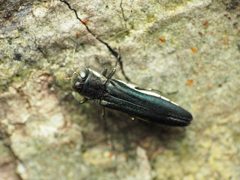
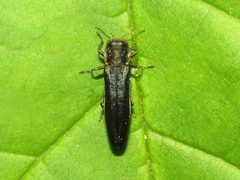
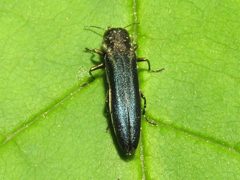
Agrilus carpini is a of metallic wood-boring beetle in the Buprestidae, first described by Josef Knull in 1923. It belongs to the hyperdiverse Agrilus, which contains nearly 4,000 described species and is considered one of the largest genera in the animal kingdom. The species is known from North America, with records from Canada (Ontario, Québec) and the United States. Like other members of the genus, it likely develops as a larva in woody plant material, though specific biological details remain poorly documented.
Pronunciation
How to pronounce Agrilus carpini: /ˈa.ɡrɪ.lus ˈkar.pɪ.ni/
These audio files are automatically generated. While they are not always 100% accurate, they are a good starting point.
Images
Distribution
North America. Documented from Ontario and Québec in Canada. GBIF records indicate presence in the Nearctic region. The was described from North American material by Knull (1923), an entomologist based at The Ohio State University who described numerous North American Buprestidae.
More Details
Taxonomic Note
The specific epithet 'carpini' suggests an association with Carpinus (hornbeam), a of deciduous trees in the Betulaceae. However, this putative relationship has not been confirmed in the available literature.
Data Limitations
Despite being described over a century ago, Agrilus carpini remains poorly known biologically. This is typical for many Agrilus , as the 's enormous diversity (nearly 4,000 described species) has resulted in taxonomic challenges, with many species hardly distinguishable except by examination of male genitalia. Most species in the genus are small, usually less than 8 mm in length, and lack the vivid metallic colors characteristic of many other Buprestidae.
Sources and further reading
- BugGuide
- Wikipedia
- GBIF taxonomy match
- iNaturalist taxon
- NCBI Taxonomy
- Catalogue of Life
- Two new species of Agrilus from Mexico | Beetles In The Bush
- Agrilus fuscipennis on Persimmon | Beetles In The Bush
- GBCT Beetle #2: Agrilus walsinghami | Beetles In The Bush
- North America’s Most Beautiful Agrilus Jewel Beetle | Beetles In The Bush
- A flower visiting jewel beetle that is not an Acmaeodera | Beetles In The Bush
- Josef Knull was wrong! | Beetles In The Bush