
Prothecini
death-watch beetles, spider beetles
Genus Guides
5- Protheca
- Sculptotheca
- Stagetus(death-watch beetles)
- Stichtoptychus
- Striatheca
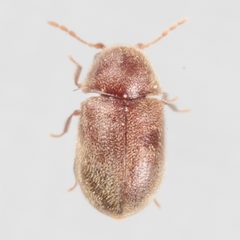
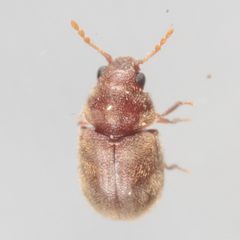
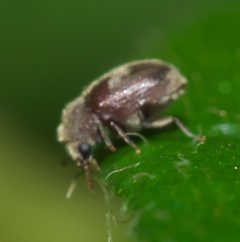
Prothecini is a tribe within the Ptinidae, encompassing approximately 15 of beetles commonly known as death-watch beetles and spider beetles. These beetles are associated with wood-boring habits and stored products, though specific ecological roles vary by genus. The tribe is distinguished taxonomically from other Ptinidae tribes by morphological characteristics of the and pronotum. Members are found across multiple continents, with diversity concentrated in certain regions.
Pronunciation
How to pronounce Prothecini: /prɒθɛˈsiːnaɪ/
These audio files are automatically generated. While they are not always 100% accurate, they are a good starting point.
Identification
Prothecini can be distinguished from other Ptinidae tribes by antennal , particularly the number and arrangement of antennomeres. Members typically exhibit the compact, rounded body form characteristic of spider beetles, with some showing the elongated, cylindrical shape associated with death-watch beetles. The pronotum often bears distinct lateral margins or that separate Prothecini from related tribes such as Xyletini.
Images
Distribution
Prothecini has been recorded across multiple continents including North America, Europe, Asia, and Africa. Distribution patterns vary significantly among the constituent , with some showing restricted regional ranges while others are more broadly distributed.
Ecological Role
As wood-boring beetles, some Prothecini members contribute to the decomposition of dead wood and recycling of nutrients in forest . Other members, particularly spider beetles, function as scavengers in stored product and indoor environments.
Human Relevance
Certain Prothecini are recognized as pests of stored products and structural timber. Death-watch beetles in particular have been documented as agents of wood damage in buildings, though specific pest status varies by and region.
Similar Taxa
- XyletiniBoth tribes occur within Ptinidae and share wood-associated habits; Xyletini is distinguished by different antennal club structure and pronotal characteristics.
- PtininiAnother tribe within Ptinidae; Ptinini members generally lack the distinct pronotal features and antennal arrangements that define Prothecini.
More Details
Taxonomic History
Prothecini has undergone taxonomic revision as the classification of Ptinidae has been refined. The tribe's current circumscription reflects modern morphological and molecular analyses distinguishing it from previously grouped .
Diversity
With approximately 15 , Prothecini represents a moderately diverse lineage within Ptinidae. The exact number of remains incompletely documented for several genera.