
Euceratocerini
death-watch beetles
Genus Guides
4- Actenobius
- Ctenobium(death-watch beetles)
- Euceratocerus(death-watch beetles)
- Xeranobium(death-watch beetles)
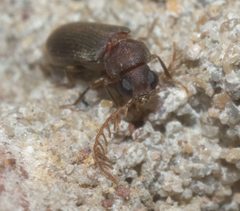
Euceratocerini is a tribe of beetles within the Ptinidae, commonly known as death-watch beetles. The tribe comprises at least 4 and approximately 18 described . Members are wood-boring beetles. The tribe includes the genera Actenobius, Ctenobium, Euceratocerus, and Xeranobium.

Pronunciation
How to pronounce Euceratocerini: /juːˌsɛrətoʊˈsɛraɪnaɪ/
These audio files are automatically generated. While they are not always 100% accurate, they are a good starting point.
Identification
Identification to tribe level requires examination of antennal structure, pronotal shape, and elytral . Members of Euceratocerini can be distinguished from other Ptinidae tribes by subtle morphological features of the capsule and antennal insertions. -level identification within the tribe relies on detailed examination of male genitalia and subtle differences in body proportions.
Images
Habitat
Associated with dead and decaying wood. have been documented from various woody substrates including hardwoods and conifers.
Distribution
North America. The constituent are documented from the United States and adjacent regions.
Diet
Wood-boring; larvae feed on dead wood. Specific preferences vary by and but remain incompletely documented for many .
Ecological Role
Decomposers of dead wood, contributing to nutrient cycling in forest . As primary colonizers of dead wood, they facilitate subsequent decomposition by fungi and other organisms.
Human Relevance
Some may infest seasoned timber and wooden structures, though economic impact is generally minor compared to related groups. The 'death-watch beetle' refers to the tapping sounds produced by some related species, though this has not been specifically documented for Euceratocerini members.
Similar Taxa
- XyletininiAnother tribe within Ptinidae; distinguished by differences in antennal club structure and body form.
- PtininiTribe within Ptinidae; generally more compact body form and different antennal .
More Details
Taxonomic history
The classification of Ptinidae has undergone revision; Euceratocerini was previously treated within Anobiidae or as part of broader concepts of death-watch beetles. Current placement in Ptinidae reflects recent phylogenetic studies.
Research needs
and of most Euceratocerini remain poorly known. , specific associations, and geographic distributions require further study.