
Thylodrias contractus
Motschulsky, 1839
Odd Beetle, tissue paper beetle
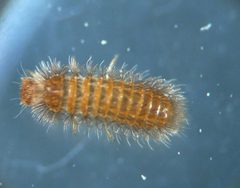
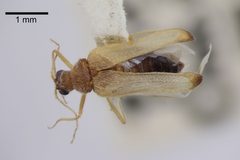
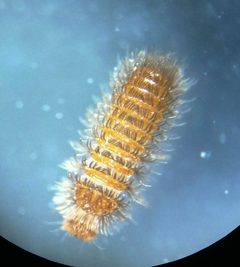
Thylodrias contractus, commonly known as the odd beetle or tissue paper beetle, is the sole in the Thylodrias within the Dermestidae. Native to Asia, it has been introduced and become widespread in North America and parts of South America. The species exhibits pronounced , with males and females differing substantially in appearance. It is occasionally reported as a pest.
Pronunciation
How to pronounce Thylodrias contractus: /θaɪloʊˈdraɪəs kənˈtræktəs/
These audio files are automatically generated. While they are not always 100% accurate, they are a good starting point.
Identification
The displays striking : males and females differ markedly in external . This dimorphism is significant enough that the sexes were historically described as separate species or even placed in different . Specific diagnostic features distinguishing T. contractus from other dermestids are not detailed in available sources, though its genus status renders it identifiable to genus level by definition.
Images
Distribution
Native to Asia. Introduced and established in North America and South America. A record from Belgium is marked as doubtful.
Human Relevance
Occasionally reported as a pest, though specific damage or commodities affected are not documented in available sources. The "tissue paper beetle" suggests an association with paper products or stored materials, but this is speculative.
Similar Taxa
- Other Dermestidae in T. contractus is sufficiently pronounced that males and females may be mistaken for different or even different , a source of historical taxonomic confusion.
More Details
Taxonomic history
The extreme of Thylodrias contractus led to historical taxonomic confusion, with males and females described as separate entities before their conspecificity was recognized.
Phylogenetic placement
Zhou et al. (2022) included T. contractus in their comprehensive molecular of Dermestidae as part of their analysis of 477 across all .