
Thylodrias
Motschulsky, 1839
odd beetle, tissue paper beetle
Species Guides
1- Thylodrias contractus(Odd Beetle)
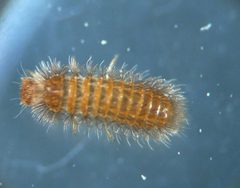
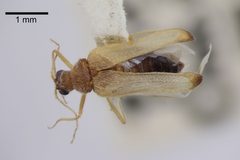
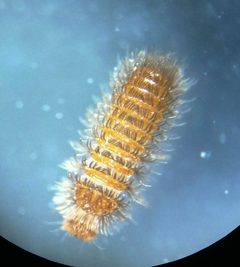
Thylodrias is a of dermestid beetles containing a single , Thylodrias contractus. The genus is notable for extreme : males are fully developed with wings and , while females are , wingless, and lack elytra. The species is native to Asia and has become a widespread introduced pest in North America.
Pronunciation
How to pronounce Thylodrias: //ˌθaɪloʊˈdraɪəs//
These audio files are automatically generated. While they are not always 100% accurate, they are a good starting point.
Identification
Males distinguished from all other Dermestidae by filamentous (not clubbed) . Females identified by their unique —no other dermestid has wingless, -less adult females. The combination of male morphology and female larviform condition confirms identification.
Images
Habitat
Dark, sheltered locations within human structures: drawers, cupboards, museum displays, and storage areas. Associated with stored materials and collections.
Distribution
Native to Asia. Introduced and widespread in North America. GBIF records indicate presence in Denmark, Norway, and Sweden.
Diet
Feeds on wool, silk, and dried animal matter including fur, feathers, and skin. Has been observed feeding on cooked beef liver in captivity. Does not consume tissue paper but may chew through it to access wrapped items.
Life Cycle
Complete with prolonged development. Larval stage is slow and extended; are relatively short-lived. Female undergoes metamorphosis from true larva to sexually mature adult despite retaining larval external form. Under stressful conditions, may exhibit retrogressive molting (becoming smaller with successive rather than larger).
Behavior
When disturbed, rolls into a ball as defensive response. Female produces to attract males; production ceases after mating, suggesting single mating event in females. Males may mate multiple times. or cryptic activity pattern in dark sheltered spaces.
Human Relevance
Household and museum pest damaging wool, silk, fur, feathers, and preserved animal specimens. Misnamed 'tissue paper beetle' due to mistaken belief about diet—actually damages materials wrapped in tissue paper. Used in taxonomic and phylogenetic studies as an exemplar of extreme in beetles.
Similar Taxa
- Other Dermestidae generaMales of Thylodrias distinguished by filamentous versus clubbed antennae in all other dermestids. Females uniquely and wingless versus fully developed females in related .
Misconceptions
'tissue paper beetle' is misleading: the does not eat tissue paper but may chew through it to reach underlying materials.
More Details
Phylogenetic position
Thylodrias is classified in Trinodinae, tribe Thylodriini. Its unusual has made it significant in studies of dermestid evolution and .
Retrogressive molting
Under stress, individuals may into smaller forms rather than growing larger—an unusual reversal of typical insect growth patterns.