
Anthrenus lepidus
LeConte, 1854
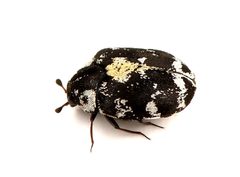
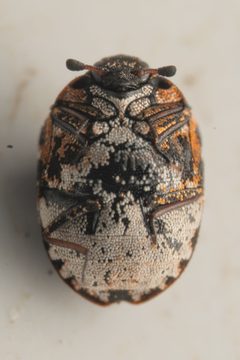
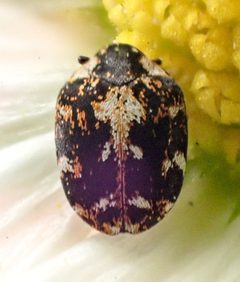
Anthrenus lepidus is a of carpet beetle in the Dermestidae. It is a small found in North America, with measuring 2-4 mm in length. Like other members of the Anthrenus, it is a household pest whose larvae feed on dried animal products including wool, silk, feathers, and keratin-based materials. The species is part of a group of pests that have spread worldwide through international commerce.
Pronunciation
How to pronounce Anthrenus lepidus: /ænˈθriːnəs ˈlɛpɪdəs/
These audio files are automatically generated. While they are not always 100% accurate, they are a good starting point.
Identification
can be distinguished from other small, round beetles by the presence of dense, -like hairs covering the rather than the smooth or punctate surfaces seen in lady beetles. The scale patterns of Anthrenus lepidus specifically differ from the more commonly encountered Anthrenus verbasci (varied carpet beetle), though precise identification to level requires examination of subtle differences in scale coloration and arrangement. The Anthrenus is distinguished from other Dermestidae by the rounded body form and distinctive elytral scaling; Attagenus (black carpet beetles) are more elongate-oval and uniformly dark, while Trogoderma species have different body proportions and scale patterns.
Images
Habitat
are found outdoors on flowers where they feed on pollen. Indoors, larvae inhabit dark, undisturbed locations where dried organic matter accumulates: beneath furniture, in closets, attics, wall voids, and within stored products. The thrives in human dwellings and associated structures.
Distribution
Native to North America. Documented from the United States and Canada, including British Columbia. The has likely been transported to other regions through commerce, as is common for carpet beetles.
Seasonality
are most commonly observed in spring when they seek flowers for pollen feeding and may enter buildings. Indoor can persist year-round given stable temperatures and food sources. The duration varies with temperature, ranging from 4-12 months under typical conditions.
Diet
Larvae feed on dried animal products rich in keratin: wool, silk, feathers, fur, leather, and accumulated hair and skin of humans and pets. They also consume dead insects, dry pet food, and occasionally stored plant products such as cereals, grains, nuts, and spices. feed on pollen and nectar from flowers.
Life Cycle
Females deposit up to 100 in cracks and crevices near larval food sources. Larvae pass through several instars over 2-3 months or longer, depending on temperature and food quality. Larvae are covered in setae that can become airborne and cause irritation. occurs in the last larval skin or in a nearby protected location. emerge after a few weeks. The complete ranges from 4-12 months, with warmer temperatures accelerating development.
Behavior
Larvae avoid light and remain hidden in dark, undisturbed areas. are attracted to light and frequently found on windowsills or in light fixtures. Adults fly well and may disperse to flowers outdoors. When disturbed, larvae curl into a defensive posture. The setae of larvae can entangle would-be , providing defense.
Ecological Role
In natural , dermestid beetles function as scavengers that consume remains of dead animals in late decomposition stages, specifically digesting keratin in hide and hair that few other organisms can process. This recycling role has been exploited by zoologists and museums to clean skeletal material. In human environments, they become pests.
Human Relevance
Anthrenus lepidus is a significant household and museum pest. Larvae damage woolens, carpets, upholstery, taxidermy, insect collections, and stored food products. The larval setae can cause allergic reactions including rhinitis, asthma, and contact dermatitis in sensitive individuals. Control relies on , elimination of infested materials, freezing or heat treatment of vulnerable items, and storage in cedar chests or airtight containers. Traditional mothballs () have been observed to be ineffective, with larvae consuming the material; paradichlorobenzene crystals may work at high concentrations but carry potential health risks.
Similar Taxa
- Anthrenus verbasci (varied carpet beetle)Similar size, rounded shape, and -covered with variegated color patterns. Distinguished by specific differences in scale coloration and arrangement; A. verbasci typically shows more distinct wavy bands of white, brown, and black scales.
- Attagenus unicolor (black carpet beetle)Shares Dermestidae and similar larval feeding habits. are larger (3-5 mm), more elongate-oval, uniformly black or dark brown, and lack the colorful patterns of Anthrenus.
- Trogoderma species (khapra beetle and relatives)Related dermestid pests with similar larval habits. have different body proportions, more cylindrical form, and lack the dense, colorful elytral scaling of Anthrenus.
More Details
Scale structure
The colorful patterns on Anthrenus beetles are created by hundreds of microscopic covering the , not by pigment in the itself. These scales are modified setae that produce the characteristic carpet beetle appearance.