
Lyctini
Billberg, 1820
Powderpost beetles (tribe)
Genus Guides
3- Lyctoxylon
- Lyctus(powderpost beetles)
- Minthea(tropical powderpost beetles)
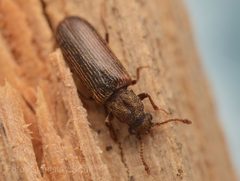
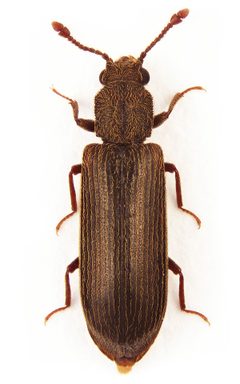
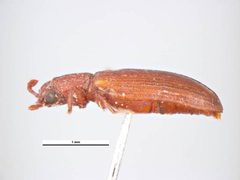
Lyctini is a tribe of wood-boring beetles within the Bostrichidae, commonly known as powderpost beetles. Members are characterized by their ability to digest cellulose through symbiotic yeasts, enabling them to infest and damage seasoned hardwoods. The tribe includes economically significant pests such as in the Lyctus. These beetles are distinguished from other Bostrichidae by their small size, cylindrical bodies, and reduced elytral declivity.
Pronunciation
How to pronounce Lyctini: //lɪkˈtiːnaɪ//
These audio files are automatically generated. While they are not always 100% accurate, they are a good starting point.
Identification
Small beetles, usually 3-6 mm in length, with elongated cylindrical bodies. have a two-segmented club. Pronotum lacks the hood-like projection seen in some other Bostrichidae. are often parallel-sided and may show fine punctation. The declivity ( slope of elytra) is gradual rather than abrupt. Distinguished from Dinoderini by the shape of the antennal club and body proportions.
Images
Distribution
distribution, with occurring across temperate and tropical regions worldwide. Individual species distributions vary; some are widespread through human commerce of timber products.
Diet
Larvae feed on starch-rich hardwoods, particularly those with high sapwood content. Require wood moisture content above 8% but below 30%. Cannot digest wood cellulose directly; rely on symbiotic yeasts (Saccharomycopsis) in specialized gut pockets to break down starch.
Life Cycle
Complete . Females lay in pores, cracks, or tunnels in wood. Larvae tunnel through wood, creating fine powder-like . Development time varies from months to years depending on temperature, wood type, and starch content. occurs in wood; emerge through circular exit holes 0.8-1.5 mm in diameter. Adults do not feed on wood and are relatively short-lived.
Behavior
are cryptic and often remain in wood until . Larval feeding produces characteristic fine, powdery that distinguishes from other wood-borers. Adults may be attracted to light. Some can reinfest seasoned wood, allowing to persist in structural timbers and furniture.
Ecological Role
Decomposers of dead hardwoods in natural . In forests, they contribute to nutrient cycling by breaking down fallen branches and logs.
Human Relevance
Significant pests of seasoned hardwood timber, wooden structures, and wooden artifacts including furniture, flooring, and tool handles. are detected by holes and accumulations of powder-like . Control relies on reducing wood moisture, using wood , and chemical treatments. International phytosanitary regulations address movement of infested wood products.
Similar Taxa
- DinoderiniAlso in Lyctinae; distinguished by different antennal club structure and more pronounced elytral declivity
- BostrichiniDifferent within Bostrichidae; generally larger, with more robust bodies and often with pronotal hoods; attack softwoods and unseasoned wood rather than seasoned hardwoods