
Trachypachidae
C.G. Thomson, 1857
False Ground Beetles
Genus Guides
1is a small of beetles containing only six extant across two : four species of Trachypachus in the Holarctic region (northern Eurasia and northern North America) and two species of Systolosoma in southern South America (Chile and Argentina). The family was historically more diverse, with numerous fossil species from the Mesozoic Era. Phylogenetic placement has been contentious; recent molecular studies place Trachypachidae as sister to the clade comprising Carabidae and within the terrestrial adephagan subgroup Geadephaga. The family is distinguished from similar ground beetles primarily by enlarged hind .
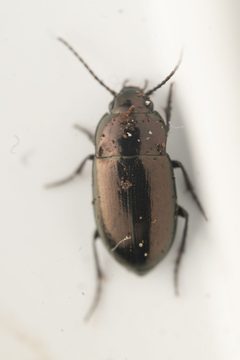
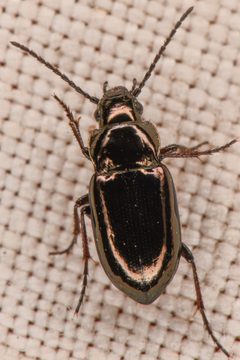
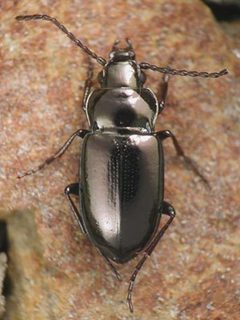
Pronunciation
How to pronounce Trachypachidae: /trækɪˈpækɪˌdiː/
These audio files are automatically generated. While they are not always 100% accurate, they are a good starting point.
Identification
Distinguished from ground beetles (Carabidae) by the large of the rearmost legs. Modern (Trachypachus and Systolosoma) differ from extinct Eodromeinae in the shape and position of jointed to the mesocoxae. Members generally resemble small ground beetles in overall body form.
Images
Habitat
Leaf litter of coniferous forests. Extant occur in montane or high-latitude temperate regions.
Distribution
Northern Eurasia, northern North America (four of Trachypachus); Chile and Argentina (two species of Systolosoma). Fossil record extends to Permian-Triassic boundary of Russia (~252 million years ago) with additional Mesozoic fossils from Germany, China, Mongolia, Kazakhstan, and South Korea.
Diet
Thought to be mostly and scavengers based on association and morphological similarity to ground beetles.
Behavior
activity pattern. Habits similar to ground beetles.
Similar Taxa
- CarabidaeSimilar overall body form and preference; distinguished by smaller hind and different mesocoxal structure.
More Details
Phylogenetic Uncertainty
The 's phylogenetic relationships have been historically unstable, previously classified as a of Carabidae and placed in various positions relative to other families. Recent molecular using nuclear genes (18S rDNA, 28S rDNA, wingless) support placement within monophyletic Geadephaga as sister to Carabidae+.
Fossil Record
Extinct Eodromeinae contains numerous from Permian through Early Cretaceous, indicating substantially greater past diversity. Earliest fossils (Petrodromeus, Permunda, Apermunda) date to Late Permian (~252 Ma) of Russia.