
Hydaticus bimarginatus
(Say, 1830)
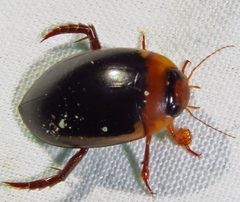
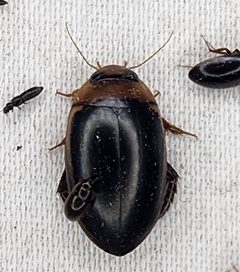
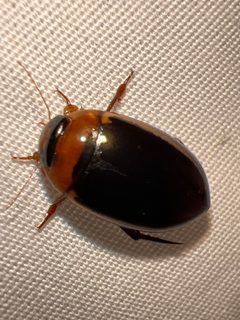
Hydaticus bimarginatus is a of predaceous diving beetle in the Dytiscidae, occurring across North America. The species is moderately well-documented with over 1,000 observations on iNaturalist, indicating established presence in aquatic . As a member of Hydaticus, it is associated with lentic and lotic freshwater systems where it functions as an active .
Pronunciation
How to pronounce Hydaticus bimarginatus: /hɪˈdætɪkəs baɪˌmɑːrdʒɪˈneɪtəs/
These audio files are automatically generated. While they are not always 100% accurate, they are a good starting point.
Identification
Distinguished from other Hydaticus by the paired marginal pale stripes on (the 'bimarginate' condition). Separated from similar dytiscids such as Cybister and Dytiscus by smaller size, more slender body proportions, and specific elytral pattern. Males possess diagnostic modifications to pro- and mesotarsi for grasping females during mating. Requires examination of genitalia for definitive separation from congeneric species.
Images
Habitat
Permanent and semi-permanent freshwater including ponds, lakes, slow-moving streams, and marshes. Found in vegetated with emergent and submerged macrophytes. Tolerates range of water chemistries but requires habitats with adequate prey .
Distribution
North America; documented from southern Canada through the United States. Records span diverse ecoregions from the Atlantic seaboard to the Great Plains and southwestern states.
Seasonality
active spring through fall; peak activity varies regionally. occurs as adults in permanent waters. Larval development during warmer months.
Diet
Active consuming small aquatic including insect larvae, crustaceans, and other aquatic arthropods. Prey size limited by mandibular gape and body size.
Life Cycle
Holometabolous development with , larval, pupal, and stages. Eggs deposited on submerged vegetation. Larvae are aquatic with three instars; occurs in moist terrestrial substrates near water edge. Typically , though southern may show partial second .
Behavior
Strong swimmer using hind legs in alternating power stroke. surface to replenish air stores carried beneath . foraging common; attracted to lights. Males use modified forelegs to grasp females during mating.
Ecological Role
Intermediate in freshwater , regulating of small . Serves as prey for larger aquatic predators including fish, amphibians, and other predatory insects.
Human Relevance
No direct economic importance; occasionally collected for scientific study. Presence indicates healthy aquatic with adequate prey resources. Not considered a pest .
Similar Taxa
- Hydaticus aruspexOverlapping North American range; distinguished by elytral pattern and male genitalia structure
- Hydaticus pacificusWestern North American ; requires examination of for definitive separation
- Cybister fimbriolatusSimilar size and ; distinguished by larger body, more rounded outline, and different elytral
More Details
Taxonomic Notes
described by Thomas Say in 1830 from North American material. The specific epithet 'bimarginatus' refers to the characteristic paired marginal markings on the .