
Acilius
Leach, 1817
Small Flat Diving Beetles
Species Guides
7- Acilius abbreviatus(Abbreviated Predaceous Diving Beetle)
- Acilius athabascae(Athabascan Predaceous Diving Beetle)
- Acilius confusus
- Acilius fraternus
- Acilius mediatus(Median Predaceous Diving Beetle)
- Acilius semisulcatus(Woods Predaceous Diving Beetle)
- Acilius sylvanus(Woodland Predaceous Diving Beetle)
Acilius is a Holarctic of diving beetles in the Dytiscidae, commonly known as Small Flat Diving Beetles. These aquatic beetles are characterized by their flattened body shape adapted for swimming. The genus has a , producing one per year. Several are recognized, including the widespread Acilius sulcatus.
Pronunciation
How to pronounce Acilius: /əˈsɪliəs/
These audio files are automatically generated. While they are not always 100% accurate, they are a good starting point.
Identification
Distinguished from other Dytiscidae by the combination of: strongly flattened body profile; male tarsal expansions on front and middle legs; and placement in tribe Aciliini. Separated from similar such as Graphoderus by details of male genitalia and tarsal structure. The genus name is masculine, affecting epithet endings.
Images
Appearance
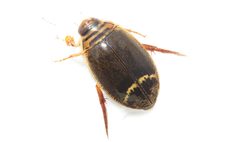
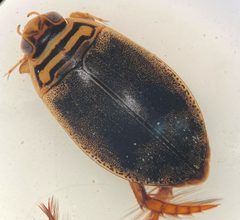
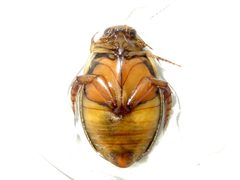
Body dorsoventrally flattened with a streamlined, oval shape. Hind legs modified into flattened, oar-like swimming appendages fringed with setae. surface often smooth or with fine sculpturing. Size varies by ; generally range from 15–25 mm in length. Coloration typically dark with variable patterns of yellow or reddish markings on .
Habitat
Freshwater aquatic environments including ponds, lakes, slow-moving streams, and marshes. Occupits both permanent and temporary water bodies. and larvae are aquatic, requiring clean, oxygenated water.
Distribution
Holarctic distribution, occurring across northern North America, Europe, and Asia. Present in and temperate zones, extending into suitable montane and lowland within this range.
Seasonality
active spring through autumn depending on latitude and elevation. with typically as adults. Peak activity during warmer months when occurs.
Diet
Predatory, feeding on small aquatic . Prey includes insect larvae, crustaceans, and other small aquatic animals. Both and larvae are active .
Life Cycle
: one per year. laid on aquatic vegetation. Larvae develop through three instars, feeding actively. occurs in moist soil or debris at water margin. emerge, return to water, and may overwinter before breeding the following season.
Behavior
Strong swimmers using hind legs in alternating strokes. regularly surface to replenish air supply carried beneath . Males use modified forelegs and midlegs to grasp females during mating. Both adults and larvae are agile .
Ecological Role
Predatory component of freshwater , regulating of small . Serve as prey for larger aquatic including fish and birds. Contribute to nutrient cycling in lentic .
Human Relevance
Occasionally used as bioindicators of water quality due to sensitivity to pollution and degradation. No significant economic impact; neither pest nor beneficial in agricultural contexts. Subject of ecological and taxonomic research.
Similar Taxa
- GraphoderusSimilar flattened diving beetles in tribe Aciliini; distinguished by male genitalic structure and details of tarsal modifications
- DytiscusLarger diving beetles in same ; Acilius generally smaller with more pronounced body flattening and different male tarsal structure
More Details
Taxonomic History
Authored by Leach in 1817. The has been subject to revision regarding boundaries and subgeneric classification. Some authorities recognize subgenera within Acilius, though this remains debated.
Research Significance
Frequently studied in aquatic due to well-documented and Holarctic distribution, facilitating comparative studies across continents.