
Cyclotrachelus substriatus
(LeConte, 1846)
woodland ground beetle
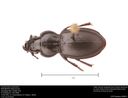
Cyclotrachelus substriatus is a of ground beetle in the Carabidae, first described by John Lawrence LeConte in 1846. It is a woodland-dwelling species found in North America, particularly in the United States. The species belongs to the Cyclotrachelus, which comprises forest-associated ground beetles. Records indicate it has been documented through limited observations, with 9 records on iNaturalist as of the source date.
Pronunciation
How to pronounce Cyclotrachelus substriatus: /saɪkloʊˈtrækələs sʌbˈstraɪətəs/
These audio files are automatically generated. While they are not always 100% accurate, they are a good starting point.
Identification
As a member of the Cyclotrachelus, this likely exhibits the characteristic convex body form and striated typical of the genus. Specific distinguishing features from such as C. heros, C. constrictus, C. gravidus, and C. torvus are not documented in available sources. Identification to species level likely requires examination of male genitalia or other subtle morphological characters.
Images
Habitat
Woodland , based on its designation as a 'woodland ground beetle' and the association with forest environments.
Distribution
North America, with confirmed presence in the United States. Specific state or regional records are not detailed in available sources.
Behavior
Ground-dwelling habits inferred from Carabidae and ; specific unreported.
Similar Taxa
- Cyclotrachelus heros in same , also sought in Oklahoma region, likely similar woodland preferences
- Cyclotrachelus constrictus in same , also sought in Oklahoma region, potentially overlapping distribution
- Cyclotrachelus gravidus in same , also sought in Oklahoma region
- Cyclotrachelus torvus in same , also sought in Oklahoma region, suggesting similar requirements
More Details
Collection interest
The appears on a collector's wish list for Oklahoma, suggesting it is sought after by entomologists but may be infrequently encountered or regionally limited in distribution.