
Anchomenus
Bonelli, 1810
Species Guides
3Anchomenus is a of ground beetles (Carabidae) established by Bonelli in 1810. The genus is distributed across the Palearctic region, including Europe, the Near East, and North Africa, with 18 extant and two fossil species. One species, Anchomenus dorsalis, has been studied as a climate change indicator due to its sensitivity to temperature and precipitation variables.
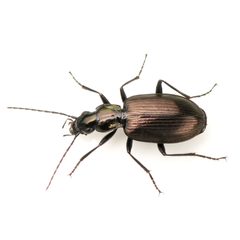
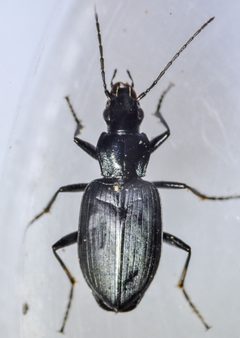
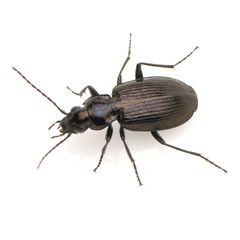
Pronunciation
How to pronounce Anchomenus: //ænˈkoʊmɛnəs//
These audio files are automatically generated. While they are not always 100% accurate, they are a good starting point.
Images
Habitat
Natural and agrarian . Specific bioclimatic requirements for A. dorsalis include sensitivity to mean air temperature, mean daily temperature amplitude, precipitation in the coldest quarter, minimum temperature of the coldest month, mean temperature of the warmest quarter, and annual precipitation.
Distribution
Palearctic region including Europe, the Near East, and North Africa. Under climate change scenarios, A. dorsalis show predicted range shifts to the north, northeast, and east with decreases in southern European regions; intracontinental territories shift northeast and east while islands shift west and northwest.
Diet
Entomophagous. A. dorsalis is described as a specialized entomophage (insect ).
Ecological Role
A. dorsalis serves as an important monitoring for assessing conditions in natural and agrarian and functions as a sensitive indicator of global climate change effects.
Human Relevance
Used as a biological indicator for monitoring and climate change research.
Sources and further reading
- BugGuide
- Wikipedia
- GBIF taxonomy match
- iNaturalist taxon
- NCBI Taxonomy
- Catalogue of Life
- Effect of global climate change on the distribution of Anchomenus dorsalis (Coleoptera, Carabidae) in Europe
- Supplementary material 1 from: {"en": "Brygadyrenko V, Avtaeva T, Matsyura A (2021) Effect of global climate change on the distribution of Anchomenus dorsalis (Coleoptera, Carabidae) in Europe. Acta Biologica Sibirica 7: 237-260. https://doi.org/10.3897/abs.7.e72409"}