
Dicaelus crenatus
LeConte, 1853
notched-mouth ground beetle
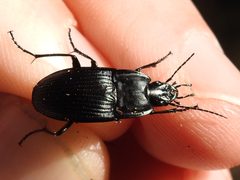
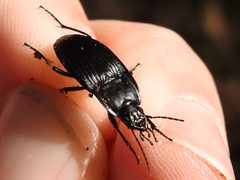
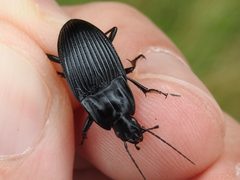
Dicaelus crenatus is a of ground beetle in the Carabidae, first described by LeConte in 1853. It belongs to the Dicaelus, commonly known as notched-mouth ground beetles. The species has been documented in North America, with observational records from the United States. Like other members of its genus, it is likely a predatory associated with terrestrial , though specific ecological details remain limited in available literature.
Pronunciation
How to pronounce Dicaelus crenatus: //dɪˈsiːləs krɛˈneɪtəs//
These audio files are automatically generated. While they are not always 100% accurate, they are a good starting point.
Identification
Members of the Dicaelus can be distinguished from similar ground beetles by their characteristic notched or (upper lip), which gives the group its . Dicaelus crenatus specifically may be separated from by subtle morphological features of the elytral and body proportions, though detailed diagnostic characters require examination of or specialized taxonomic literature. The typically exhibits the elongated, somewhat flattened body form common to many Carabidae, with and prominent, forward-directed typical of predatory ground beetles.
Images
Distribution
North America; documented from the United States based on distribution records and iNaturalist observations.
Similar Taxa
- Other Dicaelus species share the notched-mouth characteristic and similar body plan; precise identification requires examination of subtle morphological differences in elytral , body proportions, and genitalia.
- General CarabidaeMany ground beetles share similar overall appearance; Dicaelus is distinguished by the and specific antennal and mandibular characteristics.
More Details
Taxonomic note
The specific epithet 'crenatus' refers to a notched or scalloped margin, likely alluding to the characteristic labral structure of the .
Data limitations
Available sources provide minimal specific information about this beyond its taxonomic placement and general distribution. Detailed biological and ecological studies appear lacking in the accessible literature.