
Bradycellus
Erichson, 1837
Species Guides
27- Bradycellus atrimedeus(Black-middled Harp Ground Beetle)
- Bradycellus badipennis(Bay-winged Harp Ground Beetle)
- Bradycellus californicus(Small California Harp Ground Beetle)
- Bradycellus conformis(Conforming Harp Ground Beetle)
- Bradycellus congener(Congeneric Harp Ground Beetle)
- Bradycellus decorus
- Bradycellus fenderi
- Bradycellus festinans
- Bradycellus harpalinus(European Harp Ground Beetle)
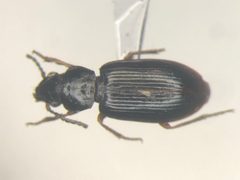
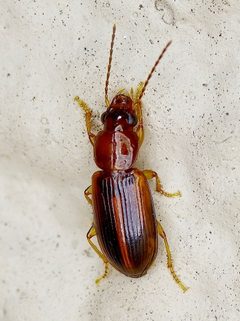
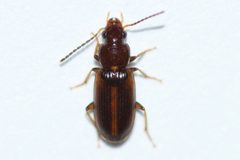
Bradycellus is a of ground beetles in the Carabidae, first described by Erichson in 1837. The genus contains more than 120 described distributed across multiple subgenera. Species occur in North America, Europe, and the Macaronesian islands. As members of the tribe Stenolophini, these beetles are small to medium-sized carabids.
Pronunciation
How to pronounce Bradycellus: /ˈbræ.dɪˌsɛl.əs/
These audio files are automatically generated. While they are not always 100% accurate, they are a good starting point.
Identification
Members of Bradycellus can be distinguished from related within Stenolophini by genitalic characters, particularly the structure of the male . The genus includes multiple subgenera defined by subtle morphological differences in body form, pronotal shape, and elytral . -level identification requires examination of genitalia and detailed external .
Images
Distribution
Recorded from North America (including Vermont and other US states), Europe (Denmark, Norway, Sweden), and the Macaronesian islands (Madeira, Canary Islands, Azores).
Similar Taxa
- StenolophusAlso in tribe Stenolophini; Bradycellus differs in genitalic structure and typically has more convex body form
- DicheirusRelated stenolophine ; Bradycellus generally lack the distinctive setal patterns found in Dicheirus
- AnisodactylusOverlapping distribution and similar size; Bradycellus often have more rounded elytral apices and different pronotal proportions
More Details
Subgeneric diversity
Bradycellus includes nine recognized subgenera: Bradycellus (sensu stricto), Atlantocellus, Bradycelloides, Catharellus, Desbordesius, Liocellus, Lipalocellus, Stenocellus, Tachycellus, and Triliarthrus. The subgenus Atlantocellus is to the Macaronesian islands.