
Euryderus grossus
(Say, 1830)
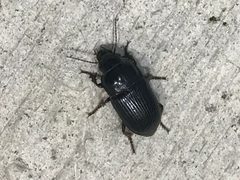
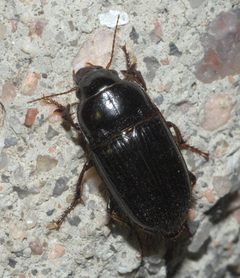
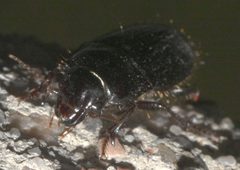
Euryderus grossus is a ground beetle in the Carabidae, and the sole member of the Euryderus. It occurs in North America, with records from Canada and the United States. As a member of the tribe Harpalini, it belongs to a diverse group of carabid beetles often associated with open . The species was described by Thomas Say in 1830.
Pronunciation
How to pronounce Euryderus grossus: /ˌjʊəˈrɪdərəs ˈɡrɒsəs/
These audio files are automatically generated. While they are not always 100% accurate, they are a good starting point.
Identification
The Euryderus can be distinguished from other Harpalini genera by its unique combination of morphological features, though specific diagnostic characters require examination of genitalia and elytral microsculpture. The name "grossus" (Latin for "thick" or "coarse") may refer to body proportions. Positive identification requires comparison with or keys.
Images
Distribution
Canada and the United States. GBIF records indicate presence in North America without further regional specificity.
Ecological Role
As a ground beetle (Carabidae), it likely functions as a or scavenger in soil and ground-level , though specific ecological roles have not been documented for this .
Similar Taxa
- Other Harpalini generaMembers of the same tribe share general body form and preferences; Euryderus is distinguished by -level characters including details of the male genitalia and pronotal structure.
More Details
Taxonomic status
Euryderus is a , making E. grossus the only in this lineage. This rarity suggests either a relict distribution or specialized ecological requirements that have limited diversification.
Authority discrepancy
Sources differ on the year of description: Say 1830 (Catalogue of Life, GBIF) versus Say 1834 (NCBI). The 1830 date is more widely accepted in taxonomic databases.