
Anisodactylus harrisii
LeConte, 1863
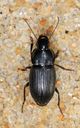
Anisodactylus harrisii is a of ground beetle in the Carabidae. It occurs in North America, with records from Canada and the United States. The species belongs to a known to include granivorous ground beetles that consume weed seeds.
Pronunciation
How to pronounce Anisodactylus harrisii: /ˌænɪsoʊˈdæktɪləs ˈhærɪsii/
These audio files are automatically generated. While they are not always 100% accurate, they are a good starting point.
Images
Habitat
Ground beetles in the Anisodactylus are generally associated with open, disturbed including agricultural fields, lawns, and gardens. They are ground-dwelling, foraging at the soil surface.
Distribution
Canada; United States. North America.
Diet
The Anisodactylus includes granivorous that feed on weed seeds. Anisodactylus harrisii has been observed as part of this granivorous feeding guild, consuming seeds of agricultural and garden weeds.
Behavior
As with other ground beetles, are fast-moving and active at the soil surface. They may be encountered beneath stones, mulch, or logs, or running across open ground.
Ecological Role
Ground beetles in the Anisodactylus contribute to weed seed , potentially reducing of agricultural and lawn weeds. They are part of the granivorous ground beetle guild that provides services in managed landscapes.
Human Relevance
Anisodactylus harrisii and related may provide of weed seeds in agricultural and garden settings. They are not known to be household pests.
Similar Taxa
- Anisodactylus sanctaecrucisAnother common granivorous ground beetle in North America with similar preferences and feeding ; distinguished by specific morphological characters not detailed in available sources.
- Harpalus pensylvanicusA granivorous ground beetle with similar weed seed and North American distribution; belongs to a different within Carabidae.
More Details
Taxonomic note
Anisodactylus harrisii was described by John Lawrence LeConte in 1863. The Anisodactylus is part of the diverse ground beetle Carabidae, which contains more than 40,000 described .