
Carabus serratus
Say, 1823
Serrate-shoulder Worm and Slug Hunter
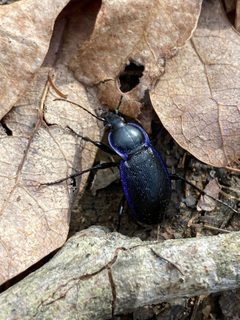
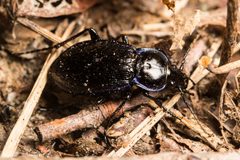
Carabus serratus is a ground beetle in the Carabidae found across North America. exhibit wing dimorphism, with individuals being either fully winged () or short-winged (brachypterous). The occupies open including moraines, gravel pits, sand pits, meadows, pastures, cultivated fields, and forest clearings. It is primarily and adults overwinter in the upper zones of sand and gravel pits.
Pronunciation
How to pronounce Carabus serratus: //ˈkærəbəs sɛˈreɪtəs//
These audio files are automatically generated. While they are not always 100% accurate, they are a good starting point.
Identification
Distinguished from similar Carabus by the serrate (saw-toothed) shoulder margin referenced in its . Wing dimorphism in —some individuals with fully developed wings, others with reduced wings—provides a notable -level trait. Specific morphological details for field identification require examination.
Images
Habitat
Open, disturbed ground including moraines, gravel pits, sand pits, meadows, pastures, and cultivated fields. Also occurs in forest clearings and open forests. concentrate in the upper zones of sand and gravel pits.
Distribution
North America; confirmed present in Canada and the United States.
Seasonality
active during warmer months; occurs in sand and gravel pit upper zones. Specific or activity periods not documented.
Life Cycle
are the known stage. Complete details including larval development and are not documented.
Behavior
Primarily . exhibit wing dimorphism, with some individuals capable of () and others flight-limited (brachypterous). Overwinters as adults in specific microhabitats within sand and gravel pits.
Similar Taxa
- Other Carabus speciesRequires examination to distinguish; the serrate shoulder margin is a key diagnostic feature for C. serratus.
More Details
Wing Dimorphism
The presence of both and brachypterous within is a notable feature of this , potentially reflecting stability or strategies.