
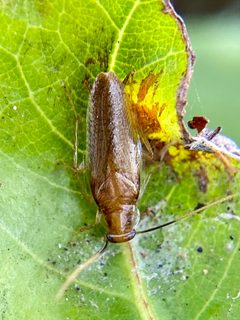
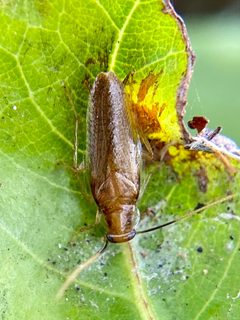
Chorisoneura parishi
Rehn, 1918
Parish's Thin-nerved Cockroach
Chorisoneura parishi is a small in the Ectobiidae, first described by Rehn in 1918. It is distributed across the Neotropical region, with records from Brazil, Colombia, French Guiana, Guyana, and Panama. The species belongs to a characterized by reduced wing venation patterns. It is one of numerous small, non-pest cockroach species that inhabit tropical forest .
Pronunciation
How to pronounce Chorisoneura parishi: /ˌkɔːrɪsoʊˈnjʊərə ˈpærɪʃi/
These audio files are automatically generated. While they are not always 100% accurate, they are a good starting point.
Identification
Distinguished from other small by reduced wing venation with simplified crossvein patterns. Differs from similar Ectobiidae by the specific configuration of the and cubital . Identification to level requires examination of male genitalia. Separated from Chorisoneura texensis and other by geographic range and subtle differences in genitalic structure.
Images
Habitat
Tropical forest . Specific microhabitat preferences are poorly documented but likely include leaf litter, rotting wood, and other humid decaying organic matter typical for small Ectobiidae.
Distribution
Neotropical region: Brazil, Colombia, French Guiana, Guyana, and Panama. Records span lowland to mid-elevation tropical forests.
Ecological Role
Decomposer in tropical forest . As with other small Ectobiidae, likely contributes to nutrient cycling through consumption of decaying plant matter.
Human Relevance
No documented economic or medical significance. Not known to be a household pest.
Similar Taxa
- Chorisoneura texensisOverlaps in general and reduced wing venation; distinguished by geographic distribution (Texensis in North America, parishi in Central and South America) and male genitalia
- Other Ectobiidae genera (e.g., Ectobius, Blattella)Similar small size and general appearance; distinguished by wing venation patterns and genitalic structure
More Details
Taxonomic Note
placement has varied; some sources list Pseudophyllodromiidae as the family rather than Ectobiidae, reflecting ongoing taxonomic revision in Blattodea. The Chorisoneura is characterized by reduced wing venation with crossveins fewer in number and more irregularly placed than in related genera.