
Aglaopteryx gemma
Hebard, 1917
little gem cockroach
Aglaopteryx gemma is a small in the Ectobiidae, commonly known as the little gem cockroach. First described by Hebard in 1917, this species occurs in the southeastern United States and the Bahamas. It belongs to a of small, often inconspicuous cockroaches that inhabit leaf litter and ground-level vegetation.

Pronunciation
How to pronounce Aglaopteryx gemma: /ˌæɡ.liˈɒp.tə.rɪks ˈdʒɛm.ə/
These audio files are automatically generated. While they are not always 100% accurate, they are a good starting point.
Identification
Distinguished from other small by combination of geographic range and presumably genitalic characters (standard for -level identification in Ectobiidae). Specific field identification characters are not documented in available sources.
Images
Appearance
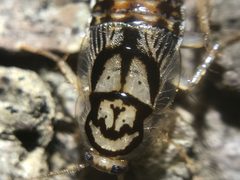
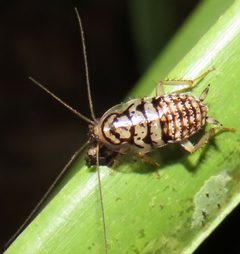
Small . Specific morphological details beyond size are not well documented in available sources.
Habitat
Ground-dwelling; associated with leaf litter and low vegetation in forested and semi-open . Exact microhabitat preferences are not well documented.
Distribution
Recorded from Alabama, Florida, Georgia, and Louisiana in the southeastern United States, and from the Bahamas. Distribution records suggest affinity for subtropical to warm temperate climates.
More Details
Taxonomic Note
placement varies between sources: GBIF lists Ectobiidae, while iNaturalist lists Pseudophyllodromiidae. This reflects ongoing taxonomic revision in ; Pseudophyllodromiidae is sometimes treated as a within Ectobiidae or as a separate family.
Data Availability
Despite 73 iNaturalist observations, detailed natural history information for this appears sparse in the primary literature. Most observations are likely incidental records from general insect surveys rather than targeted study.
Sources and further reading
- BugGuide
- GBIF taxonomy match
- iNaturalist taxon
- Gelechiidae | Beetles In The Bush
- A Revision of Soybean Caterpillar Pest Information for U.S. Soybean
- Loch Ness - big loch, small wonders! - Buglife Blog - Buglife
- Life at 8X—Guide to lepidopteran eggs on soybean | Beetles In The Bush
- Bugs in Orange and Black, Part II: A spooky southern predator heads north in a warming world – Florida predatory stink bug, Euthyrhynchus floridanus — Bug of the Week
- The Brilliance of Brownfields - Buglife Blog - Buglife