
Pseudomops septentrionalis
Hebard, 1917
pale-bordered field cockroach, firefly roach
Pseudomops septentrionalis is a small field-dwelling native to North and Central America. It is commonly known as the pale-bordered field cockroach or firefly roach. Unlike many cockroach associated with human structures, this species inhabits outdoor environments. It has been documented as a for the endosymbiotic bacterium , which may provide nutritional benefits.
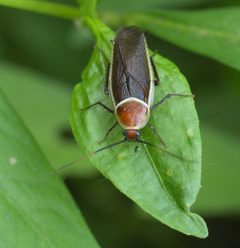
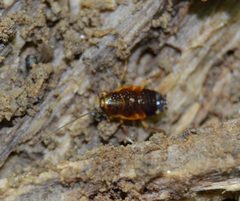
Pronunciation
How to pronounce Pseudomops septentrionalis: /ˌsjuːdoʊˈmɒps sɛpˌtɛntriəˈneɪlɪs/
These audio files are automatically generated. While they are not always 100% accurate, they are a good starting point.
Images
Habitat
Found in outdoor field environments rather than indoor human structures. Specific microhabitat preferences are not well documented.
Distribution
North America and Central America. GBIF records indicate presence across multiple U.S. regions including Northwestern, North-Central, Northeastern, Southwestern, and South-Central U.S.A.
Human Relevance
Not considered a significant pest of human structures. Documented as a for bacteria, which may provide nutritional benefits through biotin production. Research interest exists regarding potential Wolbachia-based management approaches, though this is not among the primary pest targeted for control.
Similar Taxa
- Blattella germanicaBoth are small , but B. germanica is a major indoor pest associated with human dwellings, whereas P. septentrionalis is a field-dwelling not commonly found indoors.
- Periplaneta americanaBoth belong to Blattodea, but P. americana is much larger, a significant urban pest, and has different preferences.