
Stenacidia violacea
(Reuter, 1881)
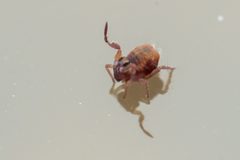
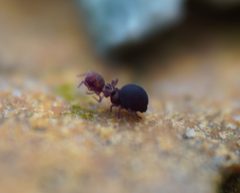
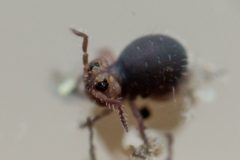
Stenacidia violacea is a in the Sminthurididae, characterized by distinctive coloration with yellowish body and purple lateral markings. The species exhibits in coloration, with females sometimes appearing dark purple. A notable behavioral trait involves contact during mating, described as resembling a 'kiss'. The species has a broad distribution spanning the Nearctic and Palearctic regions, with a recent range extension to Iran documented in 2019.
Pronunciation
How to pronounce Stenacidia violacea: /stɛnəˈsɪdiə vaɪoʊˈleɪʃə/
These audio files are automatically generated. While they are not always 100% accurate, they are a good starting point.
Identification
Distinguished from similar springtails by the combination of yellowish body with purple lateral coloration and a white stripe. are bike-shaped to straight. in color intensity may assist identification, with females sometimes appearing dark purple. Antennal contact during mating is distinctive when observed.
Images
Distribution
Nearctic distribution including United States and Canada; also recorded in Europe. Range extension to Iran documented in 2019. GBIF records indicate additional occurrences in the Azores (Faial, São Miguel), Antarctic and Subantarctic regions, Arctic and Sub-arctic, and Central Australia, though these may require verification.
Behavior
During mating, individuals bring their together in contact, described as resembling a 'kiss'.
More Details
Taxonomic Note
The was originally described by Reuter in 1881. Classified in the order Symphypleona, which contains globular springtails, and Sminthurididae.
Distribution Anomaly
While Wikipedia reports a Nearctic distribution with European records, GBIF distribution records include Antarctic, Subantarctic, and Australian localities that may represent misidentifications, vagrant transport, or require taxonomic verification given the primarily northern hemisphere distribution indicated in primary sources.
Sources and further reading
- BugGuide
- Wikipedia
- GBIF taxonomy match
- iNaturalist taxon
- NCBI Taxonomy
- Catalogue of Life
- Violaceae | Beetles In The Bush
- BitB Bits: April 2023 | Beetles In The Bush
- “62nd” Annual “Season-Opener-Birthday-Bug-Collecting-Trip” | Beetles In The Bush
- The great potential of citizen science - an opportunity to work together more in the name of preserving insects in 2021 - Buglife Blog - Buglife