
Vesicephalus
Richards WR in Delamare Deboutteville C & Massoud Z, 1964
Species Guides
2- Vesicephalus crossleyi
- Vesicephalus occidentalis(globular springtail)
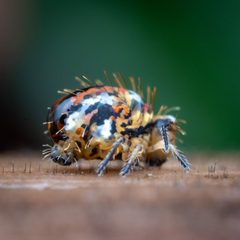
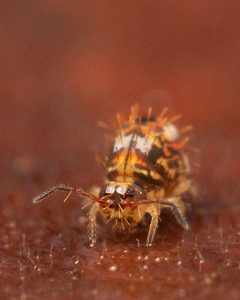
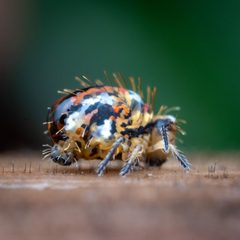
Vesicephalus is a of globular springtails in the Katiannidae, distinguished by a unique pair of interocular vesicles with demonstrated photoreception function. The genus is rare and has been recorded from North America, Spain, and Russia. The photoreceptive vesicles are thought to provide high sensitivity to light, potentially restricting these animals to dark microhabitats. At least four are currently recognized.
Pronunciation
How to pronounce Vesicephalus: /vɛsɪˈkɛfələs/
These audio files are automatically generated. While they are not always 100% accurate, they are a good starting point.
Identification
The is uniquely characterized by a pair of interocular vesicles with demonstrated photoreception function. A taxonomic key to is available in the revision by Ardanaz and Pozo (2006).
Images
Distribution
North America, Spain (Europe), and Russia. GBIF records also indicate presence in continental Southeast Asia.
More Details
Photoreceptive vesicles
The interocular vesicles have been demonstrated to function as photoreceptors, with possible function being high sensitivity to light. This feature may be responsible for restriction within the range, permitting these animals to live in dark environments.
Species count discrepancy
Sources report either four or five described in the . The 2006 revision mentions five species and provides a key, while Wikipedia and other sources cite at least four species.