
Mesaphorura macrochaeta
Rusek, 1976
Mesaphorura macrochaeta is a of in the Tullbergiidae, described by Rusek in 1976. It belongs to the Mesaphorura, a group of small, soil-dwelling collembolans characterized by reduced or absent and a furcula adapted for jumping. The species has been recorded across multiple continents including polar, temperate, and tropical regions, suggesting broad environmental or potential cryptic diversity. Like other members of its family, it inhabits soil and leaf litter microhabitats.
Pronunciation
How to pronounce Mesaphorura macrochaeta: //ˌmɛsəfəˈrʊərə ˌmækroʊˈkiːtə//
These audio files are automatically generated. While they are not always 100% accurate, they are a good starting point.
Identification
Distinguished from other Mesaphorura primarily by chaetotaxy, specifically the arrangement and number of macrosetae on the body. The specific epithet macrochaeta refers to the presence of enlarged setae. Accurate identification requires microscopic examination of setal patterns on tergites and furcula . Separation from congeneric species such as M. krausbaueri or M. yosii requires detailed chaetotaxic analysis; molecular confirmation may be necessary given the morphological similarity among Mesaphorura species.
Images
Appearance
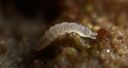
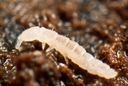
Small, elongate with typical poduromorph body plan. Body length approximately 1-2 mm. absent or reduced to single . Furcula well-developed, reaching or exceeding tip. with characteristic chaetotaxy including macrosetae (large bristles), as indicated by the specific epithet. Coloration generally pale to whitish, typical of soil-dwelling collembolans. shorter than diagonal. Postantennal organ present, a diagnostic feature of the .
Habitat
Soil and leaf litter in forested and open . Recorded from polar, subpolar, temperate, and tropical regions, indicating adaptability to diverse soil conditions. Specific microhabitat preferences within soil profile are not well documented.
Distribution
Documented from Antarctic and Subantarctic islands, Arctic and Subarctic regions, Europe, Central Australia, and Caribbean mainland. The disjunct distribution pattern suggests either broad physiological , human-mediated , or potential misidentification of cryptic .
Ecological Role
Contributes to soil as a microarthropod decomposer. As with other soil collembolans, likely participates in nutrient cycling through consumption of fungal and decaying organic matter, though specific feeding of this has not been documented.
Similar Taxa
- Mesaphorura krausbaueriSimilar body size and reduced ; distinguished by differences in chaetotaxy and macrosetae arrangement
- Mesaphorura yosiiOverlapping distribution in some regions; requires microscopic examination of setal patterns for separation
- Tullbergia spp.Congeneric members with similar elongate body form; differ in furcula structure and chaetotaxy details
More Details
Taxonomic note
The Mesaphorura is part of the Tullbergiidae, a of euedaphic (deep soil-dwelling) springtails. The specific epithet macrochaeta directly references the enlarged setae that characterize this . The broad geographic distribution reported in GBIF should be interpreted cautiously, as Mesaphorura species are morphologically conserved and may represent cryptic diversity.
Research status
Very limited -specific research exists. Most ecological and biological knowledge is inferred from -level or -level studies. The four iNaturalist observations suggest it is rarely encountered by citizen scientists, likely due to its small size and soil-dwelling habit.