
Tullbergiidae
Bagnall RS, 1935
Genus Guides
2Tullbergiidae is a of springtails (Collembola) in the order Poduromorpha, established by Bagnall in 1935. The family contains more than 30 and approximately 120 described . Members are small, soil-dwelling hexapods distributed across diverse including deserts, tropical forests, and polar regions.
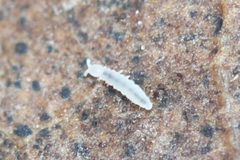
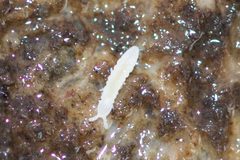
Pronunciation
How to pronounce Tullbergiidae: //tʌlˈbɜːrdʒiˌaɪdiː//
These audio files are automatically generated. While they are not always 100% accurate, they are a good starting point.
Identification
Tullbergiidae can be distinguished from other Poduromorpha by their reduced or absent , elongated body form, and reduced (springing organ) relative to some other families. The family belongs to the superfamily Onychiuroidea, sharing characteristics with Onychiuridae including reduced pigmentation and elongated . Definitive identification to family level requires examination of chaetotaxy (bristle arrangement) and mouthpart structure.
Images
Habitat
in this occupy diverse terrestrial including desert , tropical rainforests, and polar regions. They are primarily soil-dwelling, inhabiting the deeper soil layers and litter rather than surface environments.
Distribution
Documented from African Indian Desert, Amazon basin, Andean region, Antarctic and Subantarctic regions, and Antillean islands including southern Florida. The broad distribution spans tropical, temperate, and polar zones.
Similar Taxa
- OnychiuridaeAlso in superfamily Onychiuroidea; both share reduced and elongated body forms. Tullbergiidae is distinguished by specific chaetotaxy patterns and antennal structure.
More Details
Taxonomic history
The was established by Richard S. Bagnall in 1935. Classification within Collembola has been revised multiple times, with Tullbergiidae historically grouped with other euedaphic (deep soil) families.