
Pseudachorutinae
Börner, 1906
Genus Guides
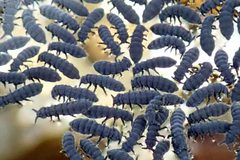
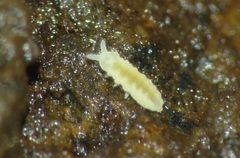
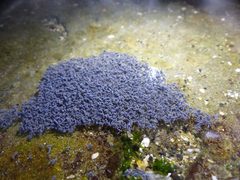
3Pseudachorutinae is a of springtails (Collembola) within the Neanuridae, established by Börner in 1906. The subfamily contains over 50 and 200 described distributed across tropical and subtropical regions worldwide, including the Caribbean, Central and South America, Asia, and the Russian Far East. Members are typically small (<1.0 mm), unpigmented springtails with reduced appendages and simplified body structures.
Pronunciation
How to pronounce Pseudachorutinae: //ˌsjuːdə.kɔːˈruːtɪnaɪ//
These audio files are automatically generated. While they are not always 100% accurate, they are a good starting point.
Identification
Members of Pseudachorutinae are distinguished from other Neanuridae by reduced appendages, absence of pigment, body length typically less than 1.0 mm, and reduced (0-2 per side). are short with 7 on segment IV, with sensillum S8 hypertrophied. The is styliform. Legs are very short without developed tenent hairs. The is reduced with 3-4 setae on each dens. Body chaetotaxy is reduced with small setae.
Images
Habitat
Tropical and subtropical forest , particularly in leaf litter and soil. Documented from subtropical wet and rain forest life zones in Puerto Rico at mid-elevations (795-815 m), including Cyrilla racemiflora forest, Tabonuco forest (<600 m), Palo Colorado forest (600-900 m), and Elfin forest (>900 m). Also recorded from relict forests of the Russian Far East, southern Primorye forests, and caves of the southern Ural.
Distribution
Widespread in tropical and subtropical regions: Caribbean (Puerto Rico), Central America (Mexico), South America (Brazil, French Guiana, Peru), Asia (Himalayas, Russian Far East, Korea, Japan), Alaska, New Caledonia, and Tasmania ( Tasmanura).
Ecological Role
Important component of soil and leaf litter in tropical forest . High abundance in litter and soil fauna contributes to ecosystem functioning, with demonstrated responses to disturbance, altitude, and vegetation type changes.
Similar Taxa
- NeanurinaeBoth are of Neanuridae; Pseudachorutinae is distinguished by reduced appendages, smaller body size (<1.0 mm), and simplified chaetotaxy compared to more robust, better-developed Neanurinae
- CaputanurininaeAnother Neanuridae ; Pseudachorutinae differs in having reduced (0-2 per side), shorter with characteristic arrangement, and more reduced
More Details
Taxonomic Complexity
The exhibits considerable morphological diversity across its 50+ , with some genera originally described under different taxonomic concepts (e.g., Tasmanura was redescribed due to misinterpretation of gross , leading to potential misidentifications from South Africa).
Sampling Methodology
Specimens are typically collected using Berlese-Tullgren funnels from leaf litter and soil . In Puerto Rico, persist through both dry and rainy seasons (documented collections from November, February, May, and August).
Conservation Concerns
The Tasmanian Tasmanura has documented risks to persistence due to specificity in Tasmanian rainforest .
Sources and further reading
- BugGuide
- Wikipedia
- iNaturalist taxon
- NCBI Taxonomy
- Catalogue of Life
- Corrections to the description of Tasmanura (Pseudachorutinae)
- New species of the genus Philotella Najt & Weiner, 1985 (Collembola, Neanuridae, Pseudachorutinae) from the Russian Far East
- A new Caribbean species of Hylaeanura Arlé, 1966 (Collembola, Neanuridae, Pseudachorutinae).
- New species of Furculanurida (Collembola, Neanuridae, Pseudachorutinae) from the Luquillo Mountains, Puerto Rico.